Sunday, February 14, 2021

How Logging Accidents Happen

Logging operations involve felling trees and hauling logs from logging sites to the point of delivery. Logging is considered the most dangerous occupation in the United States, according to the Occupational Safety and Health Administration (OSHA). The industry employs more than 2,600 people across Kentucky. 

In addition to the hazards posed by chainsaws and logging machinery, loggers deal with the massive weights and the unstoppable momentum of falling, rolling, and sliding trees and logs. Work is often done under dangerous conditions, such as uneven or rough terrain and/or inclement weather. Because logging is often done at remote work sites, medical facilities are often not readily accessible.

The hazards inherent in logging are addressed in specific OSHA standards. Logging operations supervisors, from corporate CEOs to the logging crew foreman, are responsible for adhering to OSHA rules as well as applicable Kentucky Occupational Safety and Health standards to ensure that loggers are properly trained, equipped and supervised.

Common Logging Accidents

In most cases, we refer to logging accidents as incidents that result in injury to employees in the logging industry. But motorists sharing the roads with logging trucks are at risk of injury if improperly loaded logs come loose and fall off a truck onto the roadway.

Logging accidents include the following accidents:

  • Hit by falling objects. Nearly a quarter of all logging accidents are caused by falling logs, limbs, and entire trees that hit people. Logs may fall from skidders, loading platforms or logging trucks. Loggers working at heights, such as in trees or in bucket truck lifts, can be hit by falling branches and also can accidentally drop tools and equipment onto people below.
  • Struck by objects. Loggers can be struck by falling limbs. In addition, objects such as wood chips, bark, sawdust and stones can be thrown by chainsaws and other tools and machinery and injure people. A chainsaw itself may kickback and strike its operator if the chain is not sharpened correctly. Struck-by accidents include motor vehicle accidents on logging sites in which workers are hit by vehicles, such as in “backover” accidents.
  • Caught-in or caught-between accidents. Rolling and sliding logs, cables, and equipment can trap a worker against another object, such as a tree, embankment or machinery and crush the individual or body parts.
  • Falls. Slip and fall and trip and fall accidents are the most common workplace injury, across all industries. Loggers working in a forest can slip and fall because of uneven terrain and/or mud. They may step into holes or trip over cut branches, logs or stumps, or slip on wet leaves. Loggers working at heights may fall from trees, lifts, loading platforms and logging trucks. 
  • Inclement weather. When wetness and cold cause body temperature to drop, hypothermia can be fatal if the individual cannot be warmed quickly. Lightning strikes can also cause death and injury.

Logging Site Accident Injuries

Many injuries suffered in the logging industry are crush injuries. Crush injuries typically occur when part of the body is squeezed between heavy or immovable objects, such as a fallen tree and the ground.

Crush injuries can cause:

  • Head and traumatic brain injury (TBI)
  • Fractures (broken bones)
  • Spinal cord damage, including paralysis
  • Internal organ damage
  • Soft tissue strains, including lower back injuries
  • Compartment syndrome (increased pressure in an arm or leg that causes serious muscle, nerve, blood vessel, and tissue damage)
  • Amputation of fingers and toes and limbs
  • Bleeding, including internal bleeding
  • Cuts, lacerations
  • Bruises, contusions.

Chainsaws and other logging equipment can cause serious lacerations, including traumatic amputations, as well as eye injury from flying debris.

Hearing loss is also common among workers continually exposed to the hazardous noise of chainsaws (91-110 dBA) and cable winches. The National Institute for Occupational Safety and Health (NIOSH) says noise-exposed workers in forestry and logging have a higher percentage of hearing loss (21%) than all noise-exposed industries combined (19%).

Logging SafetyLogger loading wood

Many Kentucky loggers perform this difficult and physically demanding work for many years without seriously hurting themselves. However, many workers do suffer injuries. OSHA, NIOSH and other public and private organizations offer safety rules, tips and training.

OSHA’s suggested rules in a sample safety program for a logging contractor include:

  • Personal protective equipment, which the employer shall provide at no cost to each employee, shall be worn by all employees at all times to protect them from personal injury. Job description and work requirements will determine when, where and what specific equipment is to be used.
  • Personal protective clothing, including gloves, ballistic pads or other approved chainsaw leg protection, steel-toed boots with chainsaw cut-resistant protection, hard hat, hearing protection and eye protection must be worn at all times when operating any chainsaw.
  • The employer shall ensure that each machine and any hand-portable powered tool, including any machine or tool provided by an employee, is maintained in serviceable condition and is inspected before initial use and before each work shift. Defects or damage shall be repaired or the unserviceable machine shall be replaced before work is begun.
  • Every chainsaw placed into initial service shall be equipped with a chain brake and shall otherwise meet the requirements of the ANSI B175-1.1991, “Safety Requirements for Gasoline-Powered Chain Saws.”
  • Each employee in the immediate work area in the forest shall work in a position or location that is within visual or audible contact with another employee.
  • Before each tree is felled, conditions such as wind conditions, the lean of tree, dead limbs, snow or ice accumulation and the location of other trees shall be evaluated by the logger and precautions taken so a hazard is not created for an employee.

Contact a Kentucky Workers’ Compensation Attorney

Even an employee who does everything by the book can be injured in a workplace accident, especially in the logging industry. If an occupational injury causes you to miss seven or more days of work, you may be eligible to receive workers’ compensation benefits, regardless of who was at fault for the accident. The workers’ compensation benefits may include paid medical care and partial replacement of lost wages. This applies to cumulative injuries, such as hearing loss or chronic back pain, too.

The workers’ compensation lawyers of Morgan, Collins, Yeast & Salyer have recovered more than $200 million in workers’ comp benefits for our hardworking Kentucky clients. If you encounter any dispute about your workers’ comp claim or have any questions about what you should be receiving, contact us for a free review of your case. We stand ready to fight for you.

Contact Morgan, Collins, Yeast & Salyer at (877) 809-5352 or online today.


The post How Logging Accidents Happen appeared first on Morgan, Collins, Yeast & Salyer.


from Morgan, Collins, Yeast & Salyer https://www.kentuckycourage.com/blog/how-logging-accidents-happen/
via https://www.kentuckycourage.com

Thursday, February 11, 2021

Burden of Proof in Your Car Accident Claim

Many people are familiar with the burden of proof in a criminal trial, the concept that prosecutors must prove guilt “beyond a reasonable doubt.” However, civil cases are different. The burden of proof is lower. In a civil trial, such as a car accident injury claim, the plaintiffs must prove their case by a preponderance of the evidence. 

The result is that it may be easier than you think to pursue compensation if you have been injured in a car crash or some other accident that was someone else’s fault.

If you or a family member has been injured by someone who failed to obey traffic laws, was driving drunk or was driving recklessly, an attorney with Morgan, Collins, Yeast & Salyer can review the details and discuss whether the facts of the accident meet the burden of proof required to pursue compensation for you. This is a free, no-obligation legal consultation. You can schedule your free consultation online or by phoning (877) 809-5352 today.

What Is Burden of Proof?

The phrase “burden of proof” refers to the standard that anyone making a claim in court must meet for the court to establish their allegation as legal fact.

The burden of proof in personal injury car accident claims and other civil cases is “a preponderance of the evidence.”

The injured plaintiff has the burden to gather and present evidence to prove that the defendant’s negligent actions caused harm and the defendant should pay compensation.

A Kentucky jury hearing a car accident case would be charged with deciding whether a preponderance of the evidence indicates that it is more likely than not that the plaintiff’s allegations are true. Another way to look at a preponderance of the evidence is whether the evidence makes you believe the plaintiff with 51% certainty. If the jury decides in favor the plaintiff, the jury may then order the defendant to pay compensation.

You can see that the burden in civil cases is a lower burden than having to convince a jury beyond a reasonable doubt in a criminal case. But it’s still challenging to identify evidence and develop a compelling civil case. Our experienced car accident attorneys at Morgan, Collins, Yeast & Salyer have handled many personal injury cases over the years. We know the types of evidence to seek to build a persuasive case that meets the burden of proof in Kentucky.

 Elements of Negligence in a Car Accident Claim

In a personal injury claim, the plaintiff seeks to prove that the defendant’s negligence led to their injuries and losses. Negligence is a failure to act with the level of care that a reasonable person would have exercised under similar circumstances. After a car accident, the driver may have been negligent if he or she disobeyed traffic laws or drove recklessly and caused an accident as a result.

Proving negligence requires proof of:

  • A duty owed by the defendant to the plaintiff
  • Breach of that duty
  • Injury to the plaintiff
  • Legal causation between the defendant’s breach and the plaintiff’s injury. 

Kentucky courts recognize a universal duty of care under which every person is obligated to others to exercise ordinary care to prevent foreseeable injuries. For example, an automobile driver has to use reasonable caution when driving to prevent car crashes. Whether the car driver has failed to fulfill his or her duty and caused harm as a result is a question for the jury to decide.

Harm is demonstrated by medical records describing injuries. Harm also includes financial injury and other “damages,” such as lost work time, loss of earning capacity, physical pain and mental suffering.

The plaintiff has to show that the defendant’s negligent behavior was a substantial factor in causing the harm the plaintiff suffered. Evidence must indicate that the negligent act is the probable cause of injury, not just a possible cause. 

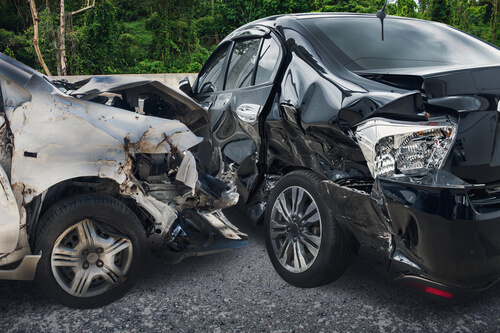
Gathering Evidence to Support a Car Accident ClaimBroken cars after a collision

It is important to start promptly to investigate a car accident before witnesses forget what they saw, physical characteristics of the accident scene change or other physical evidence becomes lost.

Evidence of the defendant’s breach of duty might be obtained through:

  • Police report, including any criminal charges against the defendant
  • Witness statements, including from police and the defendant
  • Defendant’s cell phone records, which may show activity at the time of the crash indicating distracted driving
  • Debit or credit card records, which may show purchases of alcohol prior to the crash (potential driving under the influence) or sustained activity over a lengthy period
  • Security camera footage, which may show the crash or reckless driving prior to the crash.

Evidence of injury would include:

  • Plaintiff’s medical records, which may be forwarded to a consulting physician for review and interpretation
  • Doctors’ reports and/or testimony
  • Photographs of the accident scene, vehicle damage, roadside damage (guardrails, signs, landscape), and victim’s injuries (bruises, lacerations, cast on broken limb)
  • Bills and receipts for medical care, vehicle damage repairs and other costs connected to the accident
  • Work records indicating absences
  • Plaintiff statements about pain, medical care and recovery, setbacks, missed activities due to injuries, and loss of enjoyment of life. 

 Evidence of legal causation might include:

  • Police report, including any criminal charges against the defendant
  • Witness statements or testimony, including from the plaintiff, police, doctors and the defendant
  • Accident reconstruction specialist’s report and expert testimony.

Contact an Experienced KY Car Accident Attorney

If you’ve been seriously injured by a negligent driver in Kentucky, let Morgan, Collins, Yeast & Salyer car accident attorneys prepare a case that demands full compensation for your injuries and losses. We know how the burden of proof applies to car accident claims and how to build a solid case to support your claim. Our attorneys supply the Kentucky Courage to stand up to big insurance companies.

Get started today by contacting Morgan, Collins, Yeast & Salyer at (877) 809-5352 or online to set up your free consultation.

The post Burden of Proof in Your Car Accident Claim appeared first on Morgan, Collins, Yeast & Salyer.


from Morgan, Collins, Yeast & Salyer https://www.kentuckycourage.com/blog/burden-of-proof-in-your-car-accident-claim/
via https://www.kentuckycourage.com

Thursday, December 17, 2020

Moving Beyond Physical Injuries for Workers’ Compensation

In many cases, a worker who has suffered a traumatic physical injury on the job suffers related psychological harm as well. How a worker may react to physical trauma – a deep cut, electrical shock, fall from great height, or loss of a limb – differs for each individual. But it is well established that some people react to traumatic injury in a manner similar to post-traumatic stress disorder (PTSD), which may lead to depression and premature death.

In Kentucky’s workers’ compensation program, an injured worker may obtain reimbursement for the costs of treating psychological injury suffered on the job if “it is a direct result of a physical injury” (Ky. Rev. Stat. 342.0011(1)). This is a stricter standard than in other states, but it can be met. You can obtain the Kentucky workers’ compensation benefits you deserve if your occupational injury has done more than physical harm to you.

An experienced workers’ compensation lawyer from Morgan, Collins, Yeast & Salyer can help you seek the full benefits available by law after a workplace injury. Our law firm has recovered more than $200 million in workers’ compensation benefits for hardworking Kentuckians. We stand ready to fight for you. Contact us today to set up a free legal consultation.

Psychological Responses to Traumatic Physical Injury

There are numerous factors that affect how an individual reacts to trauma. A treatment manual published by the U.S. Substance Abuse and Mental Health Services Administration (SAMHSA) says responses depend on characteristics of the individual, the type of the event(s), developmental processes, the meaning of the trauma, and sociocultural factors.

Regardless, “traumatic stress reactions are normal reactions to abnormal circumstances.” There are many varied short- and long-term responses to traumatic experiences found among individuals who may seek behavioral health services.

After a traumatic accident, a person may exhibit exhaustion, confusion, sadness, anxiety, agitation, numbness and confusion. More severe responses may include continuous distress, severe dissociation symptoms, and intrusive flashbacks that continue despite a return to safety.

Additional delayed responses to trauma can include:

  • Persistent fatigue
  • Sleep disorders
  • Nightmares
  • Fear of recurrence
  • Anxiety focused on flashbacks
  • Depression
  • Avoidance of emotions, sensations or activities that are associated with the trauma, even remotely.

These reactions will hinder the injured individual’s ability to engage in daily life activities, including working, sustaining self-esteem, and maintaining interpersonal contacts. Clearly, medical attention is warranted.

Treating the Psychological Effects of Workers’ Comp Injuries

Dr. Kenneth Larsen is a clinical psychologist at New England Baptist Hospital in Boston who treats workers who have sustained mental injuries, such as PTSD, as a result of a workplace injury. Speaking to the Workers’ Compensation Research Institute’s 36th Annual Issues & Research Conference in March 2020, he said workplace injuries often lead to mental health issues, including opioid dependence, depression and even suicide, according to a Business Insider report.

Providing early mental health treatment is key to a faster return to work, Larsen said. Larsen said that companies that communicate compassion to their workers see workers return to work more quickly than companies with a hands-off approach.

Mary Christiansen, the workers’ compensation claim manager for the electric utility Southern California Edison Co., told the conference her company developed a counseling program for workers’ comp recipients as part of its employee assistance program in 2017. It helps return injured employees to work and provides assistance for external factors, such as depression, and financial or family problems that can often accompany a workplace injury.

“Since the program’s implementation, the company’s overall claims costs have continued to decline, she said, and workers’ compensation claims that have historically come after an employee has taken Family and Medical Leave Act leave are also down,” Business Insider says.

Elsewhere, workers’ compensation claims adjuster Kristin Bowen writes that claims handlers should keep the possibility of post-injury depression in mind and maintain sensitivity and compassion when they recognize issues. Treating psychological injury, though an added cost, saves money in the long-term, she argues.

“Coupled with physical injury, post-injury depression can prolong recovery, delay return to work, and complicate the resumption of pre-injury function and activity levels,” Bowen says. “If the psychological effects are diagnosed and treated in conjunction with the physical injury, this will add time, resources, and money to the management of the physical injury, including longer periods off work, possible counseling, and added prescription costs. …

“To help promote the injured party’s recovery, both physically and mentally, it’s best that we provide the support and means to address this ever-growing challenge.”

Convincing Your Company of Your Workers’ Comp Injury Needs

The psychological impact of trauma and the value of mental health services for healing are not breaking news. However, some employers are more enlightened than others. Unfortunately, it’s just as likely, if not more so, that your employer (and/or their workers’ compensation insurer) will seek to deny payments for mental health care after a workplace injury.

In some cases, Kentucky’s workers’ comp does cover the treatment of psychological injuries and you can get a workers’ comp settlement for depression, PTSD or a similar issue.

In multiple court cases over the years, the Kentucky Supreme Court has expanded the definition of injury for workers’ comp claims, and exhibited “a growing appreciation … of the seriousness of mental injuries.”

In a case known as Richard E. Jacobs Group, Inc. v. White, the Supreme Court of Kentucky reiterated that a mental injury must result from a “work-related traumatic event,” as the statute says, and ruled that physical exertion at work – in White’s case, performing CPR on an injured man – could constitute a physically traumatic event.

As the author cited above suggests, “The White decision might allow a worker executing their daily duties to be compensated for mental injuries resulting from exertion,” a broad definition, indeed.

Our larger point is that there is reason to fight a denial of workers’ compensation benefits for mental health counseling and similar services connected to an occupational injury. Medical and legal professionals increasingly recognize that providing such services is morally correct, economically beneficial to the employer and within what Kentucky law says is appropriate.

It takes courage to stand up and say your claim is valid when you are denied. Let Morgan, Collins, Yeast & Salyer add the Kentucky Courage your workers’ compensation claim needs to recover the full benefit you deserve.

The post Moving Beyond Physical Injuries for Workers’ Compensation appeared first on Morgan, Collins, Yeast & Salyer.


from Morgan, Collins, Yeast & Salyer https://www.kentuckycourage.com/blog/moving-beyond-physical-injuries-for-workers-compensation/
via https://www.kentuckycourage.com

Tuesday, September 29, 2020

Studies Show Drivers Should Wait to Drive After Suffering a Concussion

A blow to the head may cause longer-term brain damage than previously thought and make it dangerous to drive a car even after concussion symptoms have subsided, a recent study of college students says.

The study at the University of Georgia examined 28 college students, half of whom had had a concussion two weeks earlier and half of whom had no injury. Researchers said subjects with concussions often had slower reaction times and scored lower on tests of thinking skills.

Drivers with concussions had slower reaction times than those without a head injury by an average of nearly one second, a UGA news release about the study says. Slowed reaction time is a predictor of crash risk, and split-second delays can be critical in avoiding a car accident.

The tests included simulations calling for split-second decision-making, including a child running in front of the car. The study participants with concussions took 0.03 seconds longer to react, which equated to 3 feet in stopping distance. Additionally, drivers were tested on their reaction to a stoplight. It took the drivers with concussions 0.24 seconds longer to react, an equivalent of nearly 16 feet in stopping distance, compared to drivers without concussions.

How Long to Wait Before Driving After a Concussion

“Our study suggests that complicated driving skills, the kind involving split-second reaction times that could mean the difference between life and death, are the ones that may take the longest to regain after you have a concussion — even when all of your symptoms have resolved,” Julianne Schmidt, co-director of the UGA Concussion Research Lab, says in the news release.

Schmidt found similar results in a 2017 study of 14 college-age participants who were tested on a driving simulator within 48 hours after they no longer felt the effects of their concussions. That study was published by the Journal of Neuroscience. The newer study was presented at a virtual meeting of the American Academy of Neurology in August and awaits peer review, according to U.S. News & World Report.

In a 2018 study, Schmidt found that a majority of student-athletes did not refrain from driving at any point following their previous concussions despite generally believing that driving immediately following a concussion is unsafe.

Signs of Concussion

A concussion is a mild form of traumatic brain injury (TBI). Concussions are usually caused by a blow to the head, such as in a fall, contact sports or an assault. Violent movement of the head, caused by events such as a car accident collision or being shaken, can cause a brain injury.

Most people fully recover from a concussion after several weeks of reduced activity.

The Mayo Clinic says common symptoms after a concussive TBI are headache, loss of memory (amnesia) and confusion. The amnesia usually involves forgetting the event that caused the concussion.

A person may have some symptoms of concussions immediately, and some can occur for days after the injury.

Signs and symptoms of a concussion may include:

  • Headache
  • Ringing in the ears
  • Nausea
  • Vomiting
  • Fatigue or drowsiness
  • Blurry vision
  • Confusion or feeling as if in a fog
  • Amnesia surrounding the traumatic event
  • Dizziness or “seeing stars”
  • Dazed appearance
  • Slurred speech
  • Delayed response to questions
  • Forgetfulness, such as repeatedly asking the same question
  • Concentration and memory problems
  • Irritability and other personality changes
  • Sensitivity to light and noise
  • Sleep disturbances
  • Psychological adjustment problems and depression
  • Disorders of taste and smell.

Is Driving After a Concussion Like Driving Under the Influence?

In her 2017 study, Schmidt found that, even though participants felt like they had recovered from their concussion, they were still likely to drive erratically when using a driving simulator. Their reactions at times were similar to someone driving under the influence of alcohol.

“They had less vehicle control while they were doing the driving simulation, and they swerved more within the lane,” Schmidt said. “This is a pretty large indicator of motor vehicle accident risk, and this is at a time point when they are considered recovered.”

The Concussion Institute referred to Schmidt’s 2017 study and said her researchers also compared their results to those of individuals with neurological diseases like Parkinson’s and multiple sclerosis. The Institute cited an academic study in Australia that showed that individuals who had suffered a concussion have a harder time identifying hazards on the road.

How Long After a Concussion Is It Safe to Get Back Behind the Wheel?

As is often the case after academic research, further study is needed to determine how to apply what has been learned. Schmidt has not developed a timeline for driving after a concussion. After one study, she said post-concussion driving restrictions could deter the injured from seeking medical help.

A Canadian researcher and medical practitioner commenting for the Ottawa Citizen’s lengthy examination of Schmidt’s 2017 study said he usually tells patients they can drive after a concussion or other more serious brain injury. But he also reminds patients that they are responsible for being fit to drive.

Dr. Shawn Marshall, head of physical medicine and rehabilitation at the Ottawa Hospital and a researcher with the University of Ottawa Brain and Mind Research Institute, compared concussion impairments to those for alcohol or marijuana: Having a drink or (in Canada) smoking a joint is legal, but an individual is temporarily impaired from driving because they’ve decided to do that.

Immediately after a concussion, an individual is not fit to drive, Marshall said.

A concussion impairs the individual in three cognitive areas relevant to driving:

  • Information-processing speed, or how quickly they take in information and use it
  • Dividing their attention between tasks, like checking the speedometer then looking down the road and then refocusing on the rear-view mirror
  • Ability to focus.

Driving requires the ability to multi-task and take in information quickly.

Marshall pointed out that new protocols for concussion recovery are to re-introduce activity slowly as tolerated, instead of prescribing complete rest. Marshall compared recovery from concussion to recovering from a sprained ankle: If you can walk without pain, proceed but, if walking causes pain, back off temporarily before trying again.

For driving, a 10-minute commute might be OK, but not a long vacation trip, he said.

“Obviously, if the person is acutely confused and doesn’t know the date or doesn’t know where they are, they shouldn’t be driving,” he said.

Contact a Car Accident Attorney

If you have been injured in a car accident that was caused by a driver who had recently suffered a concussion, their injury could explain the car crash. You should not be left with medical debts for a car accident caused by another driver. In Kentucky, Morgan, Collins, Yeast & Salyer will investigate to determine the cause of the car accident that injured you and move aggressively to recover the compensation you deserve to have.

Contact us online or at (877) 809-5352 today. At Morgan, Collins, Yeast & Salyer, we can provide the Kentucky Courage you need to get through this tough time.

The post Studies Show Drivers Should Wait to Drive After Suffering a Concussion appeared first on Morgan, Collins, Yeast & Salyer.


from Morgan, Collins, Yeast & Salyer https://www.kentuckycourage.com/blog/studies-show-drivers-should-wait-to-drive-after-suffering-a-concussion/
via https://www.kentuckycourage.com

Thursday, September 24, 2020

100+ MPH Speeding Tickets and Traffic Deaths Spike Under Coronavirus

Highway traffic decreased during the COVID-19 outbreak. But some reckless drivers have chosen to drive at much higher speeds on the less crowded roads, resulting in more fatal car accidents. It’s a continuing trend, says a report published by Autoblog.

The California Highway Patrol has issued more than 15,000 tickets from mid-March through August 19 to drivers clocked at speeds exceeding 100 miles per hour. The number of tickets represents more than a 100% increase over the same time period a year ago, the Associated Press says. “The most likely explanation is drivers taking advantage of more open roads because of the pandemic, said Officer Ian Hoey, a spokesman for the California agency.”

The same report cites 2,200 tickets issued to speeders in Ohio who were driving more than 100 miles per hour since April, a 61% increase over the same time period a year ago. Similar trends in ticketing have been reported in Pennsylvania and Utah.

“Less traffic has coincided with a rise in speeding in some areas of the country, and that’s a problem because speeding increases the risk of crashes and can increase crash severity as well,” says James Owens, deputy administrator of the National Highway Traffic Safety Administration (NHTSA), in a public service announcement.

The Kentucky Office of Highway Safety (KOHS) says approximately 30% of fatal crashes in Kentucky last year involved a speeding or aggressive driver.

In July, the KOHS issued a news release calling for drivers to “Stop Speeding Before it Stops You” as the Commonwealth began to reopen from the pandemic shutdown.

“Too many lives are lost each year in speed-related crashes,” KOHS Acting Executive Director Jason Siwula says in the release. “Whether you are driving a car, truck or motorcycle, we urge you to eliminate all distractions and drive at a safe, legal speed.”

In June, the Lexington Herald-Leader said Kentucky highway fatalities this year were the lowest they have been in five years, thanks to decreased traffic during the COVID-19 shutdown.

COVID-19 Status in Kentucky

As Kentucky re-opens, we need to keep in mind that the coronavirus pandemic is not over in Kentucky or elsewhere in the country.

On September 22, the day our nation’s coronavirus death count topped 200,000, Kentucky Gov. Andy Beshear said there were at least 62,731 coronavirus cases in Kentucky, 824 of which were newly reported that day. Gov. Beshear also reported seven new deaths, raising the total to 1,119 Kentuckians lost to the virus.

“Not only do we have more cases than I’d like today – 824, and 134 are kids under 18 – but our positivity rate is back up over 4%,” Beshear said in his daily COVID-19 update.

The positivity rate indicates how widespread infection is in an area where testing is occurring – and whether levels of testing are keeping up with levels of disease transmission, according to the Johns Hopkins Bloomberg School of Public Health. A high positivity rate means that more testing should probably be done – and suggests that it is not a good time to relax restrictions aimed at reducing coronavirus transmission.

The threshold for a positivity rate that is too high is 5%. The World Health Organization recommended in May that before governments consider reopening a jurisdiction, its positivity rate should remain below 5% for at least two weeks.

A White House Coronavirus Task Force report for Kentucky dated September 20 says in part for the prior week:

  • Kentucky is in the yellow zone for test positivity, indicating a rate between 5% and 7.9%, with the 14th highest rate in the country.
  • Kentucky is in the orange zone for cases, indicating between 51 and 100 new cases per 100,000 population last week, with the 19th highest rate in the country.
  • Kentucky has seen stability in new cases and a decrease in test positivity over the last week.
  • The following three counties had the highest number of new cases over the last 3 weeks: Jefferson County, Fayette County and Warren County. These counties represent 37.2% of new cases in Kentucky.
  • 56% of all counties in Kentucky have moderate or high levels of community transmission, with 14% having high levels of community transmission (red zone).

100+ MPH Speeding Tickets in Kentucky

Kentucky limits highway speeds to 70 miles per hour on specified sections of some rural interstates and 65 miles per hour on other interstates and parkways. The posted speed limits on state highways is typically 55 miles per hour, and 35 miles per hour on roads in a business or residential district. Local governments may set higher or lower speed limits within their jurisdictions.

For a speeding ticket issued for going 100 mph or more, a driver can expect a fine of $60 to $100, plus court costs, and to have his or her driver’s license suspended. This is typical for speeding 26 mph or more over the posted limit. If the speeding occurred in a highway work zone or in a school zone with lights flashing, the fine will be doubled.

A driver speeding in excess of 100 mph should also expect to be charged with reckless driving, which carries fines ranging from $20 to $100 or more, plus court costs. A reckless driving conviction also adds 3 or 4 points to the individual’s driving record, though this would be waived with suspension of their driver’s license for excessive speeding.

The real danger posed by excessive speeds is the potential for any accident to be fatal. The National Highway Traffic Safety Administration (NHTSA) says 26% of all traffic fatalities in 2018 were crashes in which at least one driver was speeding.

The consequences of speeding include:

  • Greater potential for loss of vehicle control
  • Reduced effectiveness of seat and shoulder belts, airbags
  • Increased stopping distance after the driver perceives a danger
  • Increased degree of crash severity, leading to more severe injuries.

You can count on not surviving a collision in a car going 100 mph or more. A person in a vehicle hit by a car going 100 mph would likely suffer fatal injuries, too.

The link between COVID-19, speeding tickets and traffic deaths is a man-made problem. If you encounter a speeding driver, give them plenty of space. Use your best judgment to safely steer your vehicle out of the way.

Kentucky had 111 speeding-related fatalities in 2018, 15% of all fatal crashes in the state, which was the lowest percentage of speeding-related fatalities of any state, according to the NHTSA.

If you or a loved one is injured in an accident caused by a speeding driver, you may be able to hold the negligent driver accountable for your injuries. You should speak to a personal injury lawyer about help recovering compensation for your losses. The Kentucky car accident attorneys of Morgan, Collins, Yeast & Salyer will help you demand the fair compensation you deserve. Contact us online or at (877) 809-5352.

The post 100+ MPH Speeding Tickets and Traffic Deaths Spike Under Coronavirus appeared first on Morgan, Collins, Yeast & Salyer.


from Morgan, Collins, Yeast & Salyer https://www.kentuckycourage.com/blog/100-mph-speeding-tickets-and-traffic-deaths-spike-under-coronavirus/
via https://www.kentuckycourage.com

Thursday, September 10, 2020

Health and Safety Tips for Employees Restarting Work After COVID-19

As working men and women begin returning to jobs after the COVID-19 pandemic shutdown, we urge them to ease back into physically demanding work to avoid injury. Thousands of workers’ compensation claims in Kentucky each year, particularly for back injuries, are due to musculoskeletal disorder (MSD) injuries caused by overexertion.

Employers should prepare for the possibility of physical deconditioning among workers as employees restart work. Injuries can reduce productivity and product quality in addition to the harm suffered by employees.

Below, we’ve gathered suggestions for how to avoid costly injuries at work after a months-long cessation of physical activity. At Morgan, Collins, Yeast & Salyer, our attorneys help injured workers obtain workers’ compensation benefits that keep them financially sound after injuries suffered on the job. Many of the workers we’ve helped will never fully recover physically from their debilitating work injuries. Let’s take steps now to avoid suffering unnecessary injuries in Kentucky’s workplaces.

Employers Should Focus on Health, Fitness and Well-Being

Employers, managers and supervisors set the tone at the workplace. Now is the time to ensure that your job sites and workers adhere to CDC-compliant COVID-19 protocols and to communicate to employees that you expect them to prioritize their health and each other’s safety.

Don’t overlook the possibility that many of your employees don’t understand or are misinformed about the coronavirus, how it spreads, its symptoms and preventative measures for avoiding it.

Ensure that your employees understand that they should tell their supervisors about any discomfort they are experiencing from job activities and report any potential COVID-19 symptoms or exposure they have experienced.

“Leadership can make or break a job in terms of production, quality and safety. It’s vital to remember that a leader’s actions speak louder than his words,” says Andrew Baird, senior risk technical consultant at Builders Mutual, a workers’ compensation insurer and risk management consultancy. “If a leader’s actions do not demonstrate a commitment to safety, then his or her workers will most likely take more risks, which will lead to more accidents and injuries.”

Occupational Health & Safety (OH&S) magazine suggests that employees returning to work may have been sedentary during the six months of COVID-19 shutdown.

Inactivity over that amount of time can lead to:

  • Reduced muscle strength
  • Reduced cardiovascular fitness
  • Reduced physical endurance
  • Reduced range of motion
  • Increased whole-body fatigue
  • Weight gain.

Such physical deconditioning can cause workers’ bodies to be more susceptible to injury from musculoskeletal stress and strain caused by lifting, reaching, bending, climbing, squatting, or repetitive motions.

The Occupational Safety and Health Administration (OSHA) says that work-related musculoskeletal disorders (MSD) may affect as much as one third of the workforce in construction industry trades. A new injury could easily put a worker off the job and on workers’ comp.

MSDs include cases where the nature of the injury is:

  • Pinched nerve
  • Herniated disc
  • Meniscus tear
  • Sprains, strains, tears
  • Hernia
  • Pain, swelling and numbness
  • Carpal tunnel syndrome
  • Raynaud’s syndrome or phenomenon
  • Overexertion involving outside sources
  • Repetitive motion injuries
  • Vibrating tool injuries
  • Musculoskeletal system and connective tissue diseases and disorders when the event or exposure leading to the injury or illness is unspecified overexertion and bodily reaction.

Safety Tips for Returning to WorkWorkers on the job

Workplace safety tips for the resumption of job duties after the lockdown offered by OH&S magazine and HumanTech, a workplace ergonomics consultancy, include the following:

  • Ensure that employees have all the necessary tools and equipment available to them and that they are in proper working conditions.
  • Review standard operating procedures (SOPs) and reduce non-value-added activity. Consider changing workstation layouts, rearranging at-hand tools and equipment or other efficiencies. You may need to devise ways to mechanically transport products between workstations to ensure physical distancing.
  • Limit job rotation. Rotating jobs may lead to an increased spread of germs between common touchpoints. It also has the potential to increase the workplace injury rate because it increases the number of employees exposed to high-risk jobs.
  • Encourage breaks and limit overtime hours. Workers who have been inactive may need additional time for muscle recovery, and breaks will lead to less muscle fatigue and lower risk of injury. Employers should also consider having more employees work fewer hours, as opposed to having fewer employees work more hours.

A Builders Mutual essay about avoiding injury in heavy-lifting jobs says any company can benefit from starting each workday with a stretching program. “Ask your employees to break into crews and stretch for 5 to 10 minutes first thing every morning. … Light stretching of legs, arms and neck gets the blood flowing and loosens limbs to take care of tight muscles and reduce injury risk.”

Ergonomics for Reduction of Workplace MSD Injuries

Following the tips above will help to establish ergonomic standards in your workplace. Ergonomics is the science of fitting workplace conditions and job demands to the capabilities of the workforce. The Centers for Disease Control and Prevention (CDC) says that employers, employees and other parties working together with an understanding of ergonomics can design effective programs to prevent and minimize occupational musculoskeletal disorders.

OSHA says “implementing an ergonomic process is effective in reducing the risk of developing MSDs in high-risk industries as diverse as construction, food processing, firefighting, office jobs, healthcare, transportation and warehousing.” Reducing these work-related injuries ultimately reduces a business’s costs and losses.

OSHA offers a variety of ergonomic training resources online and can dispatch consultants from state agencies or universities to work with small and medium-sized businesses to identify workplace hazards, advise about compliance with OSHA standards and assist in establishing safety and health management systems.

Contact a Workers’ Compensation Lawyer If You’ve Been Injured on the Job

Workers who suffer occupational injuries or illnesses deserve to receive workers’ compensation benefits promised to them by Kentucky law without having to fight the insurance company while they are struggling with their injuries. At Morgan, Collins, Yeast & Salyer, our Kentucky workers’ compensation lawyers will fight for you.

Phone (877) 809-5352 or contact us online today to put our brand of Kentucky Courage™ and legal knowledge and experience to work for you.

The post Health and Safety Tips for Employees Restarting Work After COVID-19 appeared first on Morgan, Collins, Yeast & Salyer.


from Morgan, Collins, Yeast & Salyer https://www.kentuckycourage.com/blog/health-and-safety-tips-for-employees-restarting-work-after-covid-19/
via https://www.kentuckycourage.com

Thursday, September 3, 2020

Concussions and its Treatment are Evolving

The consequences of suffering a concussion have prompted considerable discussion in recent years. Less has been said about the changing understanding of how concussions should be treated. Medical professionals today prescribe more structured activity and put less emphasis on having a person rest after a concussion diagnosis. Neurologists are finding that patients experience concussions in different ways.

Concussions – mild traumatic brain injuries – are commonly suffered in slip-and-fall accidents, car accidents, and contact sports, among other incidents. The Brain Injury Alliance of Kentucky estimates that every year more than 1.2 million people suffer concussions. More than 40 people a day visit hospitals in Kentucky with symptoms of TBIs.

As brain injury lawyers in Kentucky, our attorneys frequently work with clients and the families of individuals who have suffered serious brain injuries in accidents. We’ve seen how victims of TBI recover, and we’ve assisted those who will have to adapt their lives to living with the long-term effects of a brain injury. We’re gratified when we see that medical science is finding new ways to help those with concussions and with more severe brain injuries.

What is a Concussion and What are its Symptoms?

A concussion is a mild form of traumatic brain injury (TBI) caused by a bump, blow, or jolt to the head. Concussions can occur from a fall or a blow to the body or violent shaking that causes the head to move rapidly back and forth. Doctors may describe these brain injuries as “mild” because concussions are usually not life-threatening.

The leading causes of concussion are:

  • Falls
  • Motor vehicle accidents
  • Unintentionally being struck by or against an obstacle
  • Assaults
  • Playing sports.

Typically, a concussion leaves the victim dazed and confused for a few moments. Sometimes, people will say the victim “got his bell rung,” referring to a few moments of ringing-like noise accompanying the confusion one might experience after a blow to the head. There may also be some memory loss about events just before and after the accident.

In most cases, a concussion does not cause a loss of consciousness, though if it does happen, the injury may still be diagnosed as a mild TBI.

Longer-lasting symptoms of a concussion are often grouped into four categories:

  • Cognitive (Thinking / Remembering)
  • Difficulty thinking clearly
  • Feeling groggy
  • Difficulty concentrating
  • Difficulty remembering new information


  • Physical
  • Headache
  • Nausea or vomiting
  • Balance problems
  • Dizziness
  • Fuzzy or blurry vision
  • Feeling tired, having no energy
  • Sensitivity to noise or light


  • Psychological (Emotional / Mood)
  • Irritability
  • Sadness
  • Nervousness or anxiety
  • More emotional reactions than usual


  • Sleep Disturbance
  • Sleeping more than usual
  • Sleeping less than usual
  • Trouble falling asleep

Anyone who suffers a blow to the head, especially one that knocks them unconscious or leaves them feeling groggy, should see a doctor right away.

A doctor may order a scan of your brain or may conduct neurocognitive tests to assess your learning and memory skills, your ability to pay attention, and how quickly you can think and solve problems.

While most patients are seen in an emergency department or a doctor’s office and sent home, some stay in the hospital overnight for observation.

A New Approach to Treating Concussions

kentucky head injury lawyerTraditionally, a patient with a concussion was prescribed days or even weeks of “complete bed rest with no bothersome stimuli to overexcite a healing brain,” writes Dr. Vernon Williams, a sports neurologist and founding director of the Center for Sports Neurology and Pain Medicine at the Cedars-Sinai Kerlan-Jobe Institute in Los Angeles.

Today, treatment usually includes a period of initial rest and a gradual return to activity in the shorter term. Newer research has demonstrated that the brain heals better with physical activity and movement – particularly for athletes, Dr. Williams says.

Baylor Scott & White Health, one of the largest not-for-profit health care systems in the United States, has adopted an “active recovery” approach to concussions. Within a structured behavioral plan and under the guidance of a concussion expert, therapists work to keep athletes as regimented as possible with a focus on regular sleep patterns, focused nutrition, adequate hydration, and decreased stress.

“After a brief rest period of about 24-48 hours in most cases, we also recommend a gradual return to normal activities, including school and physical activity, even when (the patient) may still be experiencing some concussion symptoms,” the health group says.

Meanwhile, the Centers for Disease Control and Prevention (CDC) has in recent years released new clinical recommendations for treating children with concussions and updated its mild traumatic brain injury guidelines for adults.

Dr. Williams, the sports neurologist, says the guidelines for children are evidence-based and represent a review of concussion literature consisting of some 37,000 articles published from 1990 to 2015. “Overall, the overwhelming theme of (the CDC’s) recommendations is that concussion or mild traumatic brain injury is ‘no big deal.’ Such incidents require evaluation and follow-up for the health of our young people,” he says.

AI’s role in Concussion Treatment

All those involved in student athletics in Kentucky are aware of the KY High School Athletic Association protocols for the treatment of concussions and suspected concussions during interscholastic play. The protocols require keeping a student-athlete off of the playing field after a possible or diagnosed concussion until a doctor clears the athlete to return. For many athletes, the waiting is the hardest part.

In another essay, Dr. Williams explains the exploration of using artificial intelligence and machine learning (AI and ML) to predict how long concussion symptoms will take to resolve based on combinations of symptoms present in injured high school athletes.

“We took three years of high school concussion data from high school athletes (mostly football players) who were diagnosed with a concussion and examined the effectiveness of using an algorithm to predict their concussion symptoms (headache, dizziness, and difficulty with concentrating) resolution time. … Even with the limited data set available, computer modeling was able to accurately predict symptoms associated with prolonged recovery after a concussion,” Williams writes.

Eventually, physicians will have access to larger data sets of concussion treatment and resolutions via an app or hand-held device. The data should improve the quality and accuracy of medical care relative to the treatment approach and predicted recovery, Williams predicts.

How a Kentucky Brain Injury Lawyer Can Help

kentucky brain and head injury lawyerAs medical technology for treating concussions advances, we can expect cutting-edge medical care to be more costly when it is available. At Morgan, Collins, Yeast & Salyer, our brain injury lawyers help patients who sustained head injuries caused by the negligence of others seek compensation for medical expenses and other losses. When necessary, we also work to make sure our clients are receiving the full medical care they need.

At Morgan, Collins, Yeast & Salyer, we bring you the Kentucky Courage needed to hold insurance companies accountable and seek full compensation for your injuries. Our goal is to help you get your life back on track without the burden of medical debt. Contact us today at (877) 809-5352 to put Kentucky Courage™ on your side.

The post Concussions and its Treatment are Evolving appeared first on Morgan, Collins, Yeast & Salyer.


from Morgan, Collins, Yeast & Salyer https://www.kentuckycourage.com/blog/concussions-and-its-treatment-are-evolving/
via https://www.kentuckycourage.com