Thursday, July 15, 2021

Dangerous Roads in Lexington, Kentucky

Most car accidents happen in Kentucky’s urban areas, as opposed to in rural areas. The most recent publication of car accident statistics from the Kentucky State Police says 63% of collisions causing injuries occurred in urban areas such as Lexington.

However, the majority of fatal collisions (52%) took place in rural areas, often on rural state highways or interstates where higher speeds are more likely. An urban area is defined as an area including and adjacent to a municipality or other place of 5,000 or more population.

While 22% of all collisions occurred on city streets, only 6% of fatal collisions occurred on city streets, according to the Kentucky State Police.

When the KSP breaks down the numbers further according to the type of roadway, the stats show that:

  • 35% of all collisions occur on KY state highways
  • 23% of all collisions occur on U.S. highways
  • 12% of all collisions occur on interstate highways
  • 5% of all collisions occur on county roads
  • 1% of all collisions occur on parkways
  • 2.33% of all collisions are listed as “other.”

Among interstate highways in Kentucky, I-75, which passes through Lexington before crossing the Ohio River into Cincinnati, appears to be the most dangerous.

KSP statistics show 4,200 collisions with 23 fatalities on I-75 in the year surveyed. Its numbers far outpace the 2,891 collisions and 17 fatalities on I-65, which runs through Louisville, the state’s largest metropolitan area, and which is the next most dangerous Kentucky interstate according to this count.

We Investigate Kentucky Car Accidents

When Kentuckians are injured or lose loved ones in car accidents caused by others, they have a right to demand accountability and compensation for their losses. Fighting for what is right when your life has been turned upside down takes Kentucky Courage. At Morgan, Collins, Yeast & Salyer, our Lexington car accident lawyers represent real people who are struggling to recover from serious car accident injuries. We investigate car accidents and provide the Kentucky Courage to stand up to big insurance companies on behalf of our clients.

More Dangerous Highways in Lexington, KY

The Lexington Police Department publishes monthly traffic call reports and annual summaries of traffic accidents.

As of May 2021, there had been 11 fatal collisions in Lexington since the start of the year at the following locations:

  • Athens Boonesboro Road between Blue Sky Parkway and Blue Sky Parkway
  • I-64 between I-64/I-75 Exit 111 to I-64 East and I-64 Exit 87 to KY 859
  • 1682 Old Paris Road
  • S. Broadway and High Street
  • E. New Circle Road between Meadow Lane and Floyd Drive
  • Bryan Station Road and Rookwood Parkway
  • W New Circle Road between Clays Mill Road and KY 4 at Exit 19 from US 7
  • 7898 Old Richmond Road
  • W. High Street between Herlihy Street and Cox Road
  • Tates Creek Road between Montclair Drive and KY 1974 Crossover
  • Russell Cave Road between Dreamland Drive and Radcliff Road

In the most recent annual summary, Lexington Police say there were 25 fatal collisions resulting in 33 fatalities in Lexington 2019.cars in a highway

The locations with the most collisions resulting in injuries were:

  • Russell Cave Road between Park Place and W. New Circle Road – 9 collisions
  • E. New Circle Road and Tates Creek Road – 9 collisions

New Circle Road, also known as Kentucky Route 4, is the inner loop around Lexington. New Circle Road is seriously congested during morning and evening rush hours because it is the only freeway available for getting across the city. Many accidents on the inner loop of New Circle Road cause serious injuries because of the speeds at which vehicles are traveling.

You will see New Circle Road, Man o’ War Boulevard, Tates Creek Road, Nicholasville Road, and other primary routes in Lexington named repeatedly in car accident statistics.

According to police, the Lexington locations with the most collisions causing injury in 2019 were:

Man o’ War Boulevard between Alumni Drive and Easthills Drive, which had the most injury collisions overall and the most “between-street” collisions with 42 collisions.

Other locations with multiple between-street collisions causing injury were:

  • Russell Cave Road between Park Place and New Circle Road (9 collisions)
  • I-75 North between the Exit 113 on-ramp from U.S. 27 and the Exit 115 off-ramp to Newton Pike (6 collisions)
  • Nicholasville Road between Man o’ War Boulevard and Toronto Road (6 collisions)


 E-W Reynolds Road and Nicholasville Road had the most intersection collisions causing injuries with 33 collisions.

Other locations with multiple intersection collisions causing injury were:

  • E. New Circle Road and Tates Creek Road (9 collisions)
  • Belleau Wood Drive-Clearwater Way and Man o’ War Boulevard (7 collisions)
  • E-W. Fifth Street and North Limestone (6 collisions)
  • Keeneland Boulevard-Man o’ War Boulevard and Versailles Road (6 collisions)
  • Man o’ War Boulevard and Saron Drive-Tates Creek Centre Drive (6 collisions)
  • Moore Drive and Nicholasville Road (6 collisions)
  • Radcliffe Road and Russell Cave Road (6 collisions)


E. Vine Street and Rose Street had the most collisions with injuries involving a driver who ran a red light with 6 collisions. Citywide, there were 325 injury collisions involving a red light violation.

Other intersections with multiple injury collisions caused by someone running a red light were:

  • Moore Drive and Nicholasville Road (6 collisions)
  • Coleman Court and Newtown Pike (5 collisions)
  • Man o’ War Boulevard and Nicholasville Road (5 collisions)
  • Newtown Pike-Oliver Lewis Way and W Main Street (5 collisions)

Get Compensation for a Lexington, KY, Car Accident

In addition to causing medical trauma, a Lexington car accident can create financial stress for you and your family due to medical bills and loss of income.

But if someone else was at fault for the accident, you may have the right to seek compensation for:

  • Current and future medical bills related to your injuries
  • Permanent disabilities
  • The cost to repair your vehicle
  • Lost wages
  • Reduced earning potential
  • Pain and suffering.

Insurance companies will try to avoid paying what you truly deserve for a serious injury and may offer a low-ball settlement. But if you call our Kentucky Courage auto accident lawyers before you talk to the insurance companies, we can investigate to determine who owes you compensation and calculate every dime you are due. Then we’ll move aggressively to recover a proper payment for you.

Contact Morgan, Collins, Yeast & Salyer now to set up a free consultation about how we can handle your car accident claim. Let us tell you how Kentucky Courage can help make things right for you.

The post Dangerous Roads in Lexington, Kentucky appeared first on Morgan, Collins, Yeast & Salyer.


from Morgan, Collins, Yeast & Salyer https://www.kentuckycourage.com/blog/dangerous-roads-in-lexington-kentucky/
via https://www.kentuckycourage.com


Morgan, Collins, Yeast & Salyer Sponsors Lafayette High School Band

Morgan, Collins, Yeast & Salyer is proud to sponsor the Lafayette High School Band. The Lafayette High School Band program consists of the marching band, concert bands, jazz band, percussion ensemble, and color guard. The marching band and color guard begin their demanding schedule with band camp in July and generally rehearse and perform from August through early November. Lafayette Marching Band competes in the Kentucky Music Educators Association (KMEA) 5A classification. Concert Bands and Jazz Band perform from December through May and members regularly participate in KMEA festivals, solos and ensembles. The marching band, concert bands and jazz band all appear at school and community functions throughout the year. The bands perform under the direction of Charles M. Smith and Mr. Robert “Dee” Bishop. Learn more here.

The post Morgan, Collins, Yeast & Salyer Sponsors Lafayette High School Band appeared first on Morgan, Collins, Yeast & Salyer.


from Morgan, Collins, Yeast & Salyer https://www.kentuckycourage.com/blog/morgan-collins-yeast-salyer-sponsors-lafayette-high-school-band/
via https://www.kentuckycourage.com
Wednesday, April 28, 2021

What Dangers Do I Face When Working in a Warehouse?

Warehouse workers and material movers employed in warehouses that are part of wholesale and retail operations shelve and retrieve freight, stock or other materials. Warehouse employees may work on elevated loading docks and around conveyors, forklifts, and electrical systems common to industrial settings. Warehouse workers lift and carry heavy objects. Their work is repetitive and physically demanding. 

Moving heavy objects around warehouses or onto trucks may lead to sprains, strains, overexertion or cumulative injuries. Many types of accidents can happen in a large warehouse operation, from a slip and fall accident to a collision with a forklift to being struck by falling boxes. Accidents in warehouses can lead to serious or fatal injuries.

If you or a loved one has been injured while working in a warehouse in Kentucky, an experienced workers’ compensation lawyer from Morgan, Collins, Yeast & Salyer can help you seek the full benefits available to you by law. Our law firm has recovered more than $200 million in workers’ compensation benefits for hardworking Kentuckians. We stand ready to fight for you. Contact us today to schedule your free legal consultation.

Potential Hazards Associated With Warehouse Work

More than 1.4 million people work in warehouses in the United States. Nearly 30,500 Kentuckians are employed in warehousing and storage. The fatal injury rate for the warehousing industry is higher than the national average for all industries, the Occupational Safety and Health Administration (OSHA) says.

A warehouse employee who is injured on the job and cannot work for seven days or more should qualify for workers’ compensation benefits. Workers’ comp is no-fault insurance that pays all medical expenses and a portion of lost wages, as well as additional benefits for catastrophic injury and death.

A warehouse employee who is injured on the job should not have to fight for workers’ comp benefits. But workers’ comp insurance administrators sometimes deny or dispute valid workers’ comp claims. Some employers try to take advantage of injured workers who are unfamiliar with the Kentucky workers’ compensation system.

We urge you to contact a workers’ compensation attorney from Morgan, Collins, Yeast & Salyer to discuss the benefits available after suffering a warehouse accident. Some of the most common causes of compensable warehouse injuries include:

  • Physical Strain. Warehouse workers are often required to perform repetitive motions, including reaching, bending, pushing, pulling, lifting and carrying heavy objects. Many warehouse workers develop musculoskeletal injuries, particularly back injuries, from performing these types of labor. A strain or sprain can occur by lifting a heavy object or because of cumulative wear and tear over time.
  • Moving Machinery. Warehouse workers are often hit by forklifts, metal-body vehicles with protruding forks that move materials in warehouses and on loading docks. Warehouse workers dealing with conveyors can be injured if they become caught by pinch points, or develop musculoskeletal disorders associated with awkward postures or repetitive motions required to feed or retrieve from conveyors.
  • Falling Objects. Materials on warehouse shelves, loading docks or conveyors, or lifted by forklifts may fall and strike workers, causing blunt force or crushing injuries. Falling object injuries also occur in accidents involving the collapse of shelving, crates, or supports.
  • Exposure to Harmful Substances. There are numerous potential harmful exposures in a warehouse operation. Violations of lockout/tagout standards, which are meant to prevent exposure to electrical shock or electrocution, are among the most frequent OSHA violations found in warehouses. When toxic materials are among the items being stored, chemical burns are possible if hazardous materials spills occur.
  • Slips, Trips and Falls. Workers may slip or trip and fall on warehouse floors that are wet, cluttered, uneven or poorly lighted. Accumulated dust, sand, or sawdust on concrete floors is a slipping hazard, as well. Falls can lead to head and traumatic brain injury, back injury, broken bones and other traumatic injuries. In addition to general cleanliness and tidiness, OSHA regulations require specific guarding for floor and wall openings. a warehouse worker fell on the floor after he was hit by a heavy box - warehouse hazards
  • Cumulative Trauma. Cumulative trauma disorder (CTD) is the excessive wear and tear on muscles, tendons, and nerve tissues caused by repetitive motion over an extended period of time. Bending, reaching, stretching or lifting for several hours every day of a workweek creates micro-traumas within the worker’s body that never have the opportunity to heal. Eventually, the cumulative trauma causes chronic pain and loss of mobility.

Our Attorneys Help Injured Warehouse Employees

If you are a warehouse employee and you have been injured in an accident at work or from the cumulative effects of your job duties, you should speak to an attorney about workers’ compensation benefits you may be entitled to claim under Kentucky law.

Many Kentucky workers eligible for workers’ comp payments go without the full benefits they deserve because they do not understand the system and they have no one to stand up for them. This is especially true among laborers who are incorrectly told their cumulative work injuries are due to age and are not occupational injuries. 

The experienced workers’ compensation attorneys at Morgan, Collins, Yeast & Salyer will stand up for you. We understand the types of accidents that warehouse workers commonly suffer and the wear-and-tear injuries that end workers’ careers and make them eligible for workers’ compensation.

Our attorneys can help you pursue the workers’ compensation benefits you have a right to seek for your warehouse injury. We can file your claim, document the full extent of your injuries, and negotiate a fair settlement on your behalf with the workers’ compensation insurance company. If the insurers will not settle, your Morgan, Collins, Yeast & Salyer workers’ compensation attorney will represent you in all necessary hearings before state officials and Administrative Law Judges.

It takes Kentucky Courage to fight for fair workers’ compensation benefits when your employer says you don’t deserve them. You have the legal right to claim what you are due, and the lawyers of Morgan, Collins, Yeast & Salyer have the courage to fight for you. Contact us now for a free claim review.


The post What Dangers Do I Face When Working in a Warehouse? appeared first on Morgan, Collins, Yeast & Salyer.


from Morgan, Collins, Yeast & Salyer https://www.kentuckycourage.com/blog/what-dangers-do-i-face-when-working-in-a-warehouse/
via https://www.kentuckycourage.com
Wednesday, April 21, 2021

Do Workers’ Comp Benefits Apply When Employees Work from Home?

During the COVID-19 pandemic, many people have worked from home for periods of time.

Some workers have happily settled into WFH routines. Some have questions about whether their employer’s workers’ compensation insurance covers them if they are injured while working at home. The short answer is Yes. Workers’ compensation covers employees who are injured while performing job duties. The location where you are performing job duties when injured is not a factor.

Workers have routinely obtained workers’ comp benefits after suffering injuries on business trips, or while making deliveries, or while visiting clients. If you have been injured in an accident while performing job duties at home, you deserve workers’ compensation benefits just as if you had been injured in your office or on a construction site. But don’t be surprised if the workers’ comp insurance administrator raises questions.

If you have been injured while working from home and are getting any pushback about obtaining workers’ compensation benefits, you should speak to an experienced workers’ comp attorney as soon as possible. In Kentucky, a workers’ compensation lawyer from Morgan, Collins, Yeast & Salyer can provide the Kentucky Courage you need to fight for your rights and the full benefits provided by law. Contact us today to set up your free consultation.

Typical KY Workers’ Compensation Coverage Eligibility

In the state of Kentucky, all employers must carry workers’ compensation insurance or be self-insured, regardless of the number of people they employ or whether the workers are full-time or part-time. Certain agricultural employers are exempt from Kentucky’s workers’ compensation program. Independent contractors, domestic workers, and most volunteers also are not eligible to receive workers’ compensation benefits.

Workers’ compensation benefits are available to cover employees who suffer physical injuries or occupational diseases arising out of their employment. This does not include injuries suffered while commuting to and from work, such as in a car accident. But it does include injuries suffered during travel that are a part of job duties, such as making deliveries or driving to meet with a customer.

Illness is covered if the infirmity is caused by conditions of the workplace, including illnesses that develop over time. Illnesses that are a part of the natural aging process are not covered.

WFH Likely to Be an Ongoing Trend in Some Employment Sectors

A December 2020 Pew Research Center survey found that prior to the COVID-19 pandemic, 20% of all employed people whose jobs could be done from home actually worked from home all or most of the time. That number had increased to 71% by the end of 2020, with 54% saying they would prefer to continue working from home after the pandemic ends.

But this only works for some people. A majority of workers told Pew their job responsibilities cannot be done from home. Most upper-income workers can do their work on a computer from home, but most lower- and middle-income workers cannot. While 62% of workers with a bachelor’s degree or more education say their work can be done from home, only 23% of those without a four-year college degree make the claim.

The U.S. Bureau of Labor Statistics said in February 2021 that one of its major assumptions looking ahead is that telecommuting will be offered on a more permanent basis. “According to an analysis, working from home is generally feasible in management, professional and administrative support jobs, including those in the information, financial activities, professional and business services, and public administration industries.”

How Does Workers’ Compensation Apply to WFH Employees?

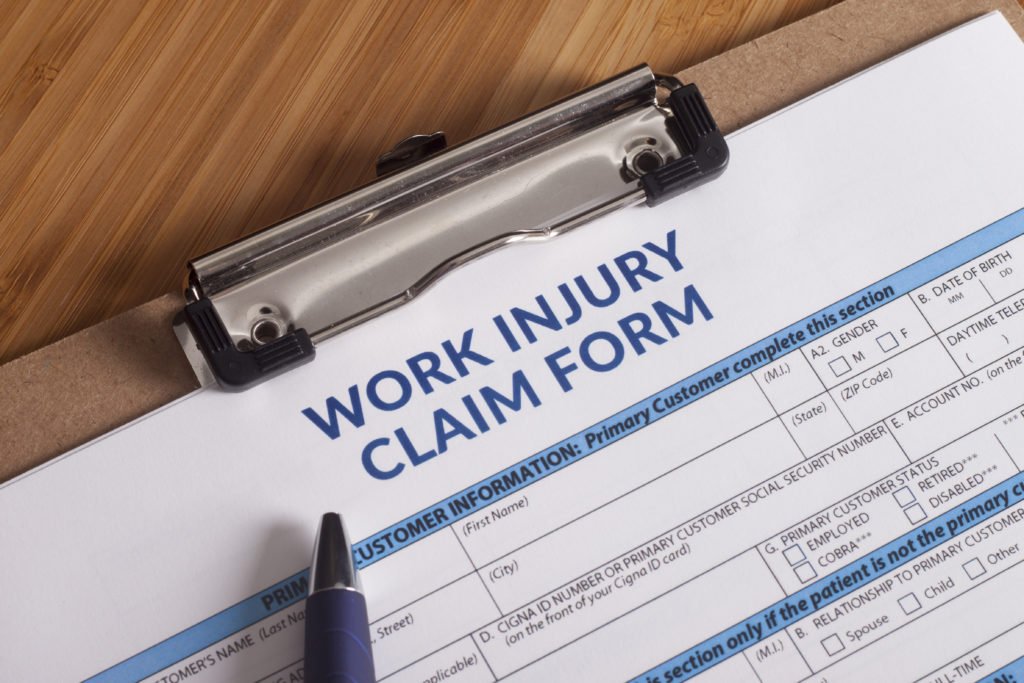
work injury claim formIf you are injured and seek workers’ compensation benefits, the primary question is going to be, “Were you on the job when you were hurt?”

In a challenge to your claim, the questions would focus on whether your injury did in fact arise from your job duties or whether you were acting in your employer’s interests when the accident happened.

For people working from home, the lines between work life and personal life can get blurry. An employer might challenge a work-at-home injury. What happens if an employee trips over one of their child’s toys while on the clock and is injured in the fall?

“Courts have found that an employer’s lack of control over the conditions of an employee’s home-based work premises is irrelevant,” the pro-employer Society for Human Resource Management (SHRM) says. “When an employee’s home is also an employee’s work premises, it is often interpreted that the hazards an employee encounters when performing work at home are also hazards of his or her employment.”

In other words, courts see the employee’s home as an extension of the workplace if the employer has agreed to a work-at-home arrangement.

In another look at workers’ compensation obligations for employees working from home, SHRM says employers should set a telecommuting policy that outlines the employer’s expectations for employees who work from home, including:

  • Expected work product
  • Expected job location
  • Job hours and how the employee clocks in and out
  • Allowed break times

A work-from-home agreement would protect employees, as well, and is something to consider suggesting if you are working at home without applicable company policies.

SHRM says the employer’s first defense against a workers’ comp claim will center on whether the teleworker gave appropriate notice to a supervisor of the injury. We advise that you or someone acting on your behalf should report a workplace injury within a week of the accident, though legally you have up to 30 days.

SHRM also suggests that employers check with their workers’ compensation and general liability insurance carriers to ensure that all appropriate coverages apply to employees who work from home.

Contact a KY Workers’ Compensation Attorney

You are covered by workers’ compensation insurance and Kentucky workers’ comp laws if you are an employee working from home in Kentucky. If you have been injured while on the job and are out of work because of the injury, you should inform yourself about the benefits available to you by speaking with a knowledgeable workers’ comp lawyer.

Report your injury to your employer and contact the Kentucky workers’ compensation lawyers of Morgan, Collins, Yeast & Salyer. We’ll show them what Kentucky Courage is as we fight for you. Contact us online or at (877) 809-5352 for a free initial consultation and dedicated representation.

The post Do Workers’ Comp Benefits Apply When Employees Work from Home? appeared first on Morgan, Collins, Yeast & Salyer.


from Morgan, Collins, Yeast & Salyer https://www.kentuckycourage.com/blog/wfh-workers-comp-benefits/
via https://www.kentuckycourage.com

Wednesday, March 24, 2021

Who May Be Held Liable in a Truck Accident?

Seeking compensation for injuries in an accident involving a tractor-trailer or other large truck can become complicated because the truck is part of a commercial enterprise. Multiple parties have a hand in putting a truck on the road, and one or more of them may be found liable for an accident.

A truck accident claim is more complex than an auto accident case. It also provides the potential for a larger total recovery. Commercial truck drivers and trucking companies are required to carry higher amounts of liability insurance than automobile owners. If multiple parties are liable for a truck accident, each may be compelled to compensate the accident victim.

The Kentucky truck accident lawyers of Morgan, Collins, Yeast & Salyer can conduct a thorough investigation of the truck accident you were in to identify all parties responsible for your injuries. Our attorneys have the experience and Kentucky Courage to stand up to deep-pocketed trucking firms and other companies involved in a truck accident claim. We’ll aggressively pursue every possible claim to recover the maximum compensation available for the painful ordeal that you or your loved ones have endured.

Who May Be Responsible for a Truck Accident?

Liability in an accident claim is based on proof that the negligence or recklessness of a party involved in the accident either caused or contributed to the accident and your injuries. The potential for multiple parties to be liable in a truck accident is one of the primary reasons that truck accidents are more complex.

After a crash involving a commercial truck, we look into the potential for a claim against the:

  • Truck driver. Typically, we look for negligence on the part of the truck driver first when we investigate a truck accident. We often find that the trucker was breaking a traffic law by speeding, driving too fast for conditions, following too closely or not paying adequate attention. In other instances, a driver may have disregarded a trucking industry regulation, such as Hours of Service restrictions. A driver may have spent too much time behind the wheel without a rest break, and drowsy driving may have contributed to the crash.
  • Trucking company. The trucking company is responsible for the drivers they hire and the trucks they put on the road. The trucking company may be named in a claim because of a negligent driver or a truck’s mechanical failure. The trucking company may also be held responsible for failing to remove an unsafe driver from the road or for failing to ensure their drivers are trained properly.
  • Truck owner. The trucking company or another party may own the truck that crashed. If an accident was caused by a mechanical problem on the truck, such as misadjusted brakes, the owner of the truck may ultimately be held liable.
  • Truck or truck parts manufacturer. When a mechanical failure on the truck leads to a crash and the truck is found to have had a defect from the start, we may seek compensation from the manufacturer that made the defective part.
  • Truck garage. Sometimes a mechanical failure that led to a crash is due to maintenance and/or repairs that were not performed properly. Many motor carriers outsource maintenance work, in which case the negligent repair shop may be liable.
  • Cargo owner and/or shipping company. Many transfer trucks carry cargo on a contract basis. Other companies own and load the cargo. If a truck’s cargo is not loaded and secured properly, it can shift or spill and cause the truck driver to lose control and crash. When this happens, the company responsible for loading the cargo may be liable for injuries.
  • Local government and its contractors. Local governments and/or their contractors may be held liable for an accident if a roadway defect contributed to a truck accident. This might be failed design, construction or maintenance of the roadway, such as a crumbling roadbed or an area of pooled rainwater runoff, or roadside issues, such as structures or flora that obscured a truck driver’s view. The improper design of a road or an unsafe design of a construction work zone may contribute to a truck accident.

How Liability is Shared Among Parties in a Truck Accident

When our investigation shows that multiple parties have liability for an accident, they may all be found to be responsible for our client’s losses.

An advantage of multiple defendants in a claim is that if, for example, the trucker’s insurance does not cover the full extent of our client’s losses, compensation available from the motor carrier or a third-party vendor may add to the total amount recovered. A disadvantage is that multiple defendants may try to blame each other.

In most truck accident cases, the driver and their employer are defendants. Usually, the truck accident has happened within the scope of the truck driver’s job duties, so the motor carrier is responsible for the actions of their employee. Even when a truck or a driver’s services are contracted, the trucking company is often held liable for the driver’s negligence.

In the end, the apportionment of damages that must be paid by multiple parties found liable for a truck accident is based on Kentucky’s application of the doctrine of comparative fault. This requires a jury to consider how much each party is at fault for an accident and to assign them a percentage of the whole. According to the law, “In determining the percentages of fault, the judge or jury shall consider the nature of the conduct of each party at fault and the causal relationship between the conduct and the damages claimed.”

Contact a KY Truck Accident Lawyer Today

If you have been injured in a truck accident, we urge you to seek the help of an experienced truck accident lawyer to investigate the accident and advise you about pursuing a truck accident claim.

In Kentucky, the truck accident lawyers of Morgan, Collins, Yeast & Salyer have the experience and Kentucky Courage you need to pursue the maximum compensation available by law.

Contact us today for your free consultation about giving accident victims the Kentucky Courage they need to fight for justice. Phone (877) 809-5352 or reach out online.

The post Who May Be Held Liable in a Truck Accident? appeared first on Morgan, Collins, Yeast & Salyer.


from Morgan, Collins, Yeast & Salyer https://www.kentuckycourage.com/blog/who-is-liable-truck-accident/
via https://www.kentuckycourage.com

How Do You Prove Negligence in a Slip and Fall?

If you have been significantly injured in a slip and fall accident caused by someone else’s negligence, you may seek compensation. But to obtain it, you must prove the accident was someone else’s fault. The Kentucky slip and fall lawyers of Morgan Collins, Yeast & Salyer can help you make your case.

Every year, millions of people are injured in falls. Some people are disabled for life by falls caused by dangerous conditions. These are preventable hazards that should have been addressed by property owners or, at a minimum, had proper warning signs to prevent falls at stores, offices, homes, sidewalks, parking lots, and garages.

Property owners have a legal obligation to ensure the reasonable safety of anyone who might legally visit the premises. When a fall hazard exists, property owners are required to fix the unsafe condition in a timely manner or post warnings of the danger. Failure to address the hazard is negligence, which makes the property owner potentially liable because of the hazard they ignored if someone is injured.

Victims of fall accidents may suffer a variety of serious injuries, such as traumatic brain injury (TBI), back injuries, broken hips or arms, knee injuries, or shoulder dislocations. A claim against the at-fault property owner’s business liability insurance or homeowner’s insurance would seek compensation for medical bills, lost income, pain and suffering, and potentially additional losses.

Typical Slip, Trip, and Fall Hazards that Lead to Injuries

  • Wet floors made slippery by spilled liquids, tracked-in rain or snow, recent mopping, buffing, or waxing.
  • Clutter, trash, or debris in store aisles, corridors, sidewalks, and other walkways.
  •  Potholes in parking lots or overgrown lawns or lots.
  • Damaged or loose flooring, carpet, rugs, mats, tile, paving stones, stair treads, or handrails.
  • Poor lighting in corridors, stairwells, and parking garages.
  • Elevators and escalators that start or stop abruptly or fail to align with the floor

To recover full compensation for an injury suffered in a fall caused by a property owner’s negligence, you need to present evidence to prove how the owner or property manager’s negligence led to your injury. This is where an experienced personal injury attorney at Morgan, Collins, Yeast & Salyer can help you.

What is Necessary to Prove Negligence in a Slip and Fall Accident?

slip and fall wet floorSlip and fall cases typically arise when someone has fallen on someone else’s property and been injured badly enough to require emergency medical treatment and time away from work. In some instances, the accident victim may contact the business where the accident occurred to request compensation and be turned down or offered little for their loss. The owner may dispute their fault for the accident or not understand their liability.

It’s important to contact a slip and fall lawyer who can negotiate on your behalf.

Our objective as personal injury attorneys representing a slip and fall accident victim is to calculate the full extent of our client’s losses and prove the property owner’s liability. We will present the property owner and their insurers with a demand for payment of the accident victim’s losses. This leads to either a payment, negotiations toward a settlement agreement, or a lawsuit, which asks a court or jury to order the property owner to pay the damages suffered by our client.

What to Prove Against the Property Owner?

  • Caused the dangerous condition that led to our client’s accident and injury
  • Should have been aware of the dangerous condition that led to the accident but was not
  • Was aware of the dangerous condition that led to the accident but did nothing about it
  • Was aware of the dangerous condition that led to the accident and took inadequate steps to remove or warn about the dangerous condition

A property owner’s first defense is that they must be allowed a reasonable amount of time to become aware of a hazard and to eliminate it. For example, if something falls onto the floor at a grocery and creates a wet, slippery floor, it’s reasonable to allow time for the grocery staff to find the spill and send someone to clean it up.

If a property owner cannot eliminate a hazard right away, they may post warnings and/or barriers to protect people from the danger.

In some cases, a property owner may argue that a reasonable person would have recognized the danger and avoided it. This is sometimes called the “open and obvious” rule, as in “it was an open pit, and it was obvious he should have steered clear of it to avoid falling in.” What is “reasonable” or “obvious” to an adult is open to interpretation. It may be part of negotiations with insurers or arguments before a jury.

The victim‘s own carelessness or inattention may be a valid defense if, for example, the person was looking at a phone when the fall occurred or was not adequately watching where he or she was going.

If the victim was trespassing, he or she may not have a legitimate claim. Note, however, that there are different rules for children who are too immature to understand trespassing or recognize an obvious danger.

How We Can Prove Your Slip and Fall Claim

Slip and fall claims are won by persuading a property owner, insurer, or jury that the property owner was at fault and the victim was hurt through no fault of their own.

List of Evidence Required to Prove Slip and Fall Claim

  • Witness statements, which may include bystanders who saw the accident or employees who can testify about the condition of the property
  • Accident reports, such as reported to the business or filed by emergency responders
  • Photos or video from witnesses or security cameras footage of the accident
  • Property maintenance and repair policies and records, which may indicate that needed repairs were known but put off

Evidence from a premises liability accident should be gathered immediately before the unsafe condition is corrected. Some evidence may require legal motions, such as seeking a business’s maintenance records or prior complaints about the same unsafe condition.

As in most things, sooner is better than later for contacting a personal injury attorney about a potential slip and fall accident claim. At Morgan, Collins, Yeast & Salyer we can start investigating your claim immediately.

Talk to Our Kentucky Slip and Fall Lawyers Today

Contact Morgan, Collins, Yeast & Salyer as soon as possible after a slip and fall accident has caused serious or catastrophic injuries. Let us get started on your case today by providing you with a free legal consultation. We serve all of Kentucky from law offices in Lexington, Somerset, Manchester, London, Hazard, Paducah, Paintsville and Prestonsburg. Contact us at (877) 809-5352 or online now.

The post How Do You Prove Negligence in a Slip and Fall? appeared first on Morgan, Collins, Yeast & Salyer.


from Morgan, Collins, Yeast & Salyer https://www.kentuckycourage.com/blog/how-do-you-prove-negligence-in-a-slip-and-fall/
via https://www.kentuckycourage.com

Tuesday, February 16, 2021

Can a Concussion Cause Permanent Brain Damage?

Mild traumatic brain injuries, known as concussions, have frequently been in the news in recent years as the National Football League, college, high school and youth sports leagues have had to confront the prevalence of concussions among athletes.

NFL concussion protocols and others modeled after them focus on getting the injured player back in the game. A concussion is defined as an injury to the brain that results in temporary loss of normal brain function. In addition to sports injuries, concussions can occur in car accidents, falls, being struck in the head and other types of accidents. Some can have lingering effects. What if the brain does not fully normalize after the prescribed period of rest? Can a concussion cause permanent brain damage?

Our brain injury lawyers in Kentucky assist clients and the families of individuals who have suffered traumatic brain injuries (TBIs) in accidents caused by the negligence of other. We’ve seen brain injury survivors recover and rebuild their lives. There is evidence that repeated concussions can cause lasting damage to the brain.

What Is a Concussion?

A concussion is a supposedly short-lived change in brain function following a blow or sudden jolt to the head. This may be due to the victim hitting their head or getting hit in the head, such as in a slip and fall or car accident. The impact leaves the individual dazed and confused for a few moments, a symptom of the brain not functioning properly. Sometimes a concussion victim is knocked unconscious. 

People with concussions often report a brief period of amnesia or forgetfulness, typically including not remembering what happened immediately before or after they were injured.

Other common symptoms include:

  • Headache
  • Double or blurry vision
  • Dizziness or imbalance
  • Nausea or vomiting
  • Memory loss
  • Ringing ears
  • Difficulty concentrating
  • Sensitivity to light
  • Loss of smell or taste
  • Trouble falling asleep.

Anyone who experiences these symptoms after suffering a blow to the head should see a doctor as soon possible. If symptoms worsen after an initial medical exam, further medical care is required.

Most people with concussions recover completely in 10 to 14 days. Some people have symptoms for several weeks before gradually getting better.

But the American Association of Neurological Surgeons says that there is no such thing as a minor concussion.

“In most cases, a single concussion should not cause permanent damage,” the Association says. “A second concussion soon after the first one does not have to be very strong for its effects to be permanently disabling.”

What Are the Long-Term Effects of a Concussion?man needs Kentucky brain injury Lawyer after an accident

The effects of a concussion persist in some people. One study found long-term structural damage to the brain in patients who had suffered a single mild traumatic brain injury (MTBI), or concussion.

As published in the journal Radiology, the study at NYU Langone School of Medicine found that MRIs showed measurable global and regional brain atrophy in patients one year after they suffered concussions.

“This is the first study that shows brain areas undergo measurable volume loss after concussion,” Yvonne W. Lui, M.D., Neuroradiology section chief and assistant professor of radiology at NYU Langone School of Medicine, said in a news release accompanying the study. “In some patients, there are structural changes to the brain after a single concussive episode.”

These changes correlated with detrimental changes in memory, attention and anxiety, the release says.

The NYU researchers used three-dimensional magnetic resonance imaging (MRI) to determine regional gray matter and white matter volumes and correlated these findings with other clinical and cognitive measurements. The study involved examining 29 concussion patients with post-traumatic symptoms after injury (with 19 followed at one year) and 22 matched controls (with 12 followed at one year).

According to WebMD, previous research has shown that 10 percent to 20 percent of concussion patients continue to experience symptoms more than a year after their head injury. 

Persistent post-concussive symptoms, or post-concussion syndrome, is a recognized diagnosis for concussion symptoms that last beyond the initial injury’s expected recovery period. The most common symptoms are headache, dizziness and sleep problems. 

Some experts believe persistent post-concussion symptoms are caused by structural damage to the brain or disruption of the messaging system within the nerves, which happened in the initial impact that caused the concussion, the Mayo Clinic says. Others believe persistent post-concussive symptoms are related to psychological factors.

A history of depression, anxiety, post-traumatic stress disorder (PTSD), significant life stressors, a poor social support system and lack of coping skills are more common in people who develop persistent post-concussive symptoms compared with those who don’t. 

Studies have also found increasing age to be a risk factor for persistent post-concussive symptoms.

Contact a Kentucky Brain Injury Lawyer

When a patient’s concussion symptoms persist or there are indications that the person has suffered some permanent cognitive deficits, the patient and family members must consider how they will address the costs and losses caused by the patient’s long-term needs. If the original concussion resulted from an incident someone else caused – a car accident, a slip and fall accident, a physical assault – they may seek compensation from the person or party at fault.

In many cases, a person who sustained a mild concussion in an accident should recover quickly. But, if symptoms of a concussion persist and continue to result in medical bills, lost work time and/or loss of enjoyment of life, you should discuss your legal options with a qualified personal injury attorney.

In most personal injury cases, Kentucky’s statute of limitations (KRS Chapter 413.140) provides one year after the injury or diagnosis of the injury to file a claim. This provides time to determine that a concussion has not cleared up in the customary amount of time and to seek legal advice about a claim to recover your ongoing medical costs and losses.

An attorney still needs time to thoroughly investigate the accident, determine who is financially liable, compile evidence for a legal claim, and contact the insurance company to try to negotiate a settlement. You should contact the Kentucky brain injury attorneys at Morgan, Collins, Yeast & Salyer as soon as possible to discuss your options after suffering a head injury that leads to medical costs, time away from work, and pain and suffering or emotional distress.

Morgan, Collins, Yeast & Salyer offers a free initial consultation and pursues personal injury cases on a contingency fee basis. You won’t have to pay us unless we recover money for you. Contact us today at (877) 809-5352 or online.


The post Can a Concussion Cause Permanent Brain Damage? appeared first on Morgan, Collins, Yeast & Salyer.


from Morgan, Collins, Yeast & Salyer https://www.kentuckycourage.com/blog/can-a-concussion-cause-permanent-brain-damage/
via https://www.kentuckycourage.com