Tuesday, August 3, 2021

Where Do the Most Common Slip and Fall Accidents Occur?

Falls are a common form of injury. The National Safety Council says more than 8 million people were treated in emergency rooms for fall-related injuries in 2019, and 39,443 people died in falls at home and at work. The Kentucky Injury Prevention and Research Center (KIPRC) says 303 people in Kentucky died from falls in 2018, and another 11,979 required hospitalization after a fall.

Slip and fall accidents that lead to serious injury can happen anywhere to anyone. The KIPRC’s report published in February 2021 says falls were the leading cause of emergency room visits for nearly every age group except for 18-24-year-olds, for whom falls were exceeded only by motor vehicle accidents.

If your fall happens on someone else’s property, you may be eligible to seek compensation for your medical bills, missed time from work, or more. Property owners have a legal obligation to ensure their buildings and grounds are safe for lawful visitors. If they neglect safety concerns or fail to provide adequate warning of foreseeable hazards, they may be held accountable for slip and fall accidents.

In Lexington, KY, phone (877) 809-5352 to find out how the Kentucky slip and fall lawyers at Morgan, Collins, Yeast & Salyer can help you. An initial consultation is always free.

Most Common Causes of Slip And Fall Accidents

The KIRPC report, Kentucky Injury Indicators 2018, lists unintentional falls that led to fatalities, hospitalizations, and emergency department visits.

Among fatal falls, which happen mostly to the elderly, the most common types of falls reported were:

  • Falls on the same level to the floor or ground – 29%
  • Falls on or from stairs or steps – 7%
  • Falls from furniture or a wheelchair – 5%
  • Falls from heights – 4%
  • Fall from one level to another – 3%

The nature of most fatal falls (52%) was unspecified.

Falls leading to hospitalization included:

  • Falls to the same level from slipping, tripping, or stumbling – 29%
  • Falls on stairs – 7%
  • Falls from furniture – 6%
  • Falls from one level to another – 3%
  • Falls from or on a ladder – 2%
  • Falls due to ice or snow – 2%
  • Falls from a nonmoving wheelchair or nonmotorized scooter – 2%
  • Falls from, out of, or through a building or structure – 1%

Falls treated at an emergency room but not requiring hospitalization included:slip and fall incident report

  • Falls to the same level from slipping, tripping, or stumbling – 28%
  • Other slipping, tripping, or stumbling falls – 13%
  • Falls from or on stairs – 9%
  • Falls from furniture – 7%
  • Falls from one level to another – 6%
  • Falls due to ice or snow – 2%
  • Falls from or on a ladder – 2%
  • Falls on or from playground equipment – 1%

Unspecified falls (28%) and other falls (3%) also led to ER visits.

In most cases reported, the individual slipped, tripped, and/or fell to the floor or ground. People also fall on stairs and steps, from furniture and ladders, and on ice and snow. Children fall from playground equipment. Falls from heights such as ladders or scaffolds often cause fatal injuries.

Common Places Where Slip and Fall Accidents Occur

You could slip and fall at any time, no matter your age or health. We typically see clients whose slip-and-fall accidents have happened in parking lots or on the premises of:

  • Grocery stores, department stores, big-box stores, malls, convenience stores, boutiques, and other retail establishments
  • Restaurants
  • Motels and hotels, including hotel banquet/meeting facilities
  • Banks, government offices and other worksites and office buildings
  • Theaters, stadiums, and arenas
  • Parks and playgrounds
  • Hospitals, doctors’ offices, clinics, and other medical centers
  • Apartment and condominium complexes
  • Retirement and nursing homes, where residents often fall
  • Private homes.

People slip, trip and fall because of:

  • Wet and slippery floors caused by spills or tracked-in rain and snow, or by mopping, waxing, buffing.
  • Cluttered aisles, floors, and walkways
  • Loose carpets, rugs, mats, floorboards, tiles, or paving stones that shift or slide when stepped on
  • Tears and holes in carpets, rugs, mats, floorboards, and linoleum that trip people
  • Broken or loose stairs, stair treads, or handrails that give way with the weight of users
  • Unguarded or unmarked potholes in parking lots or yards
  • Poor lighting in walkways, stairwells, or parking garages
  • Malfunctioning elevators and escalators that start or stop abruptly or stop misaligned with floors or landings.

What to Do After a Slip and Fall Accident

If you slip or trip and fall and are injured in a public place, such as at a grocery store, an office building, or a theater, you should report the injury to management, orally and in writing. Get the owner’s contact information. You should see a doctor right away. The property owner needs to know about the hazard and your accident, and you need to have your injuries treated. But these contacts also document the fall and injury in case you have a slip-and-fall accident claim.slips and falls at construcion sites

A slip-and-fall accident claim may be possible if:

  • You were injured in a fall on someone else’s property
  • You had a legal right to be on the property
  • The owner neglected their duty of safety to visitors to their premises
  • The harm you suffered is a result of the property owner’s negligence.

An example would be a fall at a grocery store caused by a hazard, such as a broken bottle of juice. If the staff had had reasonable time to discover the spill but had failed to clean it up or post a warning to avoid the spill, then the store may be considered negligent for injuries that occur.

You should document everything you can about a slip-and-fall injury with photos and written notes, receipts from medical visits, and speak to a slip and fall accident attorney. An attorney can advise you and, if there is potential for a claim, move to secure evidence, investigate, and file a claim on your behalf.

Contact a Kentucky Slip and Fall Accident Lawyer

If you have been injured in a fall accident on someone else’s property in Kentucky, contact Morgan, Collins, Yeast & Salyer as soon as possible. Our slip and fall lawyers can assess your potential claim in a free and confidential meeting. If our investigation indicates negligence on the property owner’s part, we’ll press hard for compensation for you.

It takes courage to stand up and say you were wronged by some company’s negligence. Let us back your Kentucky Courage with ours. Contact us now at (877) 809-5352 or online to get started on your claim for compensation you are due today.

The post Where Do the Most Common Slip and Fall Accidents Occur? appeared first on Morgan, Collins, Yeast & Salyer.


from Morgan, Collins, Yeast & Salyer https://www.kentuckycourage.com/blog/where-do-the-most-common-slip-and-fall-accidents-occur/
via https://www.kentuckycourage.com

Thursday, July 29, 2021

What You Should do After a Multiple-Vehicle Accident in Kentucky

When we think about car accidents, we often envision two cars in a collision. As car accident attorneys, we work to determine who was at fault in collisions and what compensation our clients should have for their injuries and other losses.

Demonstrating who is at fault to the satisfaction of insurance companies or a Kentucky civil jury becomes more complicated when three or more vehicles are involved in the collision.

It may not be immediately apparent why a multi-vehicle accident has happened. Three or more vehicles may be involved in a pile-up. More than one driver may be partly at fault.

If you or a loved one has been injured in a multi-vehicle crash, the attorneys of Morgan, Collins, Yeast & Salyer have the experience and the resources to determine what happened and to prove who is legally responsible for your losses. With that proof in hand, we’ll move to seek full compensation for you from those at fault.

Our attorneys at Morgan, Collins, Yeast & Salyer have the skill and the Kentucky Courage to separate fact from finger-pointing after a multi-car accident. Contact us today online or at (877) 809-5352 to schedule a free legal consultation about your accident claim.

What’s a Multi-Vehicle Accident?

Car accidents are typically categorized as single-vehicle, two-vehicle, or multi-vehicle accidents. A multiple-vehicle accident refers to one involving three or more vehicles. A multi-vehicle accident may also be called a chain-reaction collision or a pile-up.

These accidents are referred to as chain-reaction accidents because often after one or two cars collide, additional vehicles are unable to avoid involvement in the wreck.

In February 2021 on Interstate 24 outside of Paducah, KY, for example, the driver of a tractor-trailer slammed on his brakes to avoid a car that had hydroplaned and spun out in front of him. A passenger car crashed into the suddenly-stopped truck and became lodged beneath the trailer.

Sometimes, the initial impact of a collision sends one of the vehicles into a third vehicle, as occurred in a fatal I-24 crash near Paducah in May 2021.

In some cases, the initial crash cannot be avoided by oncoming vehicles, which results in a chain reaction of cars slamming into the growing pile-up of vehicles or crashing as they swerve to avoid the main wreckage. Such a multi-car accident may be due to slick roads, fog, or another reason that drivers cannot see to slow down until it is too late.

The Complexity of a Multi-Vehicle Collision Claim

The aftermath of a multi-vehicle accident is more complicated than dealing with a single- or two-vehicle collision because there may be multiple people injured and multiple drivers whose actions may have contributed to the accident. Multiple insurance companies may be involved.

Any insurance company representing a driver involved in the multi-vehicle wreck will want to establish who was at fault before it agrees to make a payment. Injured drivers and passengers with valid claims for serious injuries may get frustrated by insurance company delays in processing their claims. They may wonder whether they’ll ever be made financially whole.

The insurance companies typically give weight to the police accident reports in deciding which drivers involved in a multi-vehicle accident were at fault. If the insurance companies aren’t able to agree on the assignment of liability, a formal lawsuit may put the question before a judge and jury.

Who’s at Fault in a Multi-Vehicle Accident

The more people involved in a multi-vehicle accident, the more versions of what happened you are likely to have. No driver is likely to come forward and say it was all their fault. In fact, you should never admit or accept blame for a car accident because you may not be in a position to know all the contributing factors to a crash. As the police and insurers work to sort it out, make sure you understand your legal rights by having a car accident attorney review the details of the accident. The consultation is free and will help you clarify your options.

When we represent a client, our car accident attorneys at Morgan, Collins, Yeast & Salyer will conduct our own investigation of the crash to determine fault. We look for evidence to support your claim and to mitigate any responsibility you may have. The types of evidence we typically examine in a car accident case include:

  • Physical evidence at the accident scene
  • Road conditions at the time
  • The vehicles’ positions and damage
  • The police report and any tickets or charges filed by police
  • Drivers’ and witness’s statements
  • “Black box” data recorders found in late-model cars and commercial motor vehicles such as tractor-trailers
  • Surveillance video, if available.

Determining who is liable in a multi-vehicle crash sometimes requires working with consultants who reconstruct accidents through technical forensic work. These accident reconstruction specialists report their findings and may provide expert testimony and a multi-media presentation of the multi-vehicle collision. If a case is headed to court, our attorneys will get access to evidence held by other parties to the claim through the legal discovery process.

In a pileup, there may be several cars and multiple collisions. More than one car or driver may have contributed to an individual’s injuries or death. The evidence may show that more than one driver should be held responsible for an accident.

What Do I Do If I Am Involved in a Multi-Car Accident?

Because of the complexity of a multi-car accident and the potential for multiple versions of how the accident happened, those who compile the most evidence the soonest often have an advantage.

If you can do so safely immediately after a multi-car accident do the following:

  • Get photos and/or video of the accident scene. If you can identify the initial cause of the accident, get a photo of it and anything else that will help explain what happened.
  • Get as many names with contact and insurance information from others involved in the crash or who witnessed the crash as you can.
  • As soon as you have time to yourself, write down what happened in your own words. Do this before your memory starts to change and fade, as it inevitably will with time. Write the story of the accident you were in with as many details as you can recall.
  • Be sure to see a doctor within 24 hours of the crash, if you did not require emergency medical care and transport from the accident scene. There are several serious injuries typical of car accidents that do not exhibit symptoms right away, which a trained health care provider can identify and treat. A doctor’s exam also begins to document your injury and medical care for an accident claim.
  • Talk to a knowledgeable lawyer about your rights and whether the settlement offer is fair and reasonable based on your injuries before accepting any quick settlement offered by another driver’s insurance company.

Contact Our Experienced Paducah Car Accident Attorneys

You need a car accident lawyer experienced in Kentucky to protect your interests and help you seek full compensation for the injuries you have suffered in a multi-car accident in Paducah, KY.

At Morgan, Collins, Yeast & Salyer, we can thoroughly investigate the accident you were in and gather the evidence that shows who is obligated to compensate you for your losses. We will press aggressively to recover maximum compensation for your medical expenses, vehicle damage, lost income, and pain and suffering.

Contact Morgan, Collins, Yeast & Salyer ASAP at (877) 809-5352 or online to set up your free legal consultation. Find out how Kentucky Courage can support you.

The post What You Should do After a Multiple-Vehicle Accident in Kentucky appeared first on Morgan, Collins, Yeast & Salyer.


from Morgan, Collins, Yeast & Salyer https://www.kentuckycourage.com/blog/what-to-do-after-multi-vehicle-accident/
via https://www.kentuckycourage.com
Friday, July 16, 2021

How Often Do Drivers Fall Asleep at the Wheel?

Driver fatigue contributes to a significant portion of traffic accidents in Kentucky and across the United States.

Kentucky State Police say a driver fell asleep in 1,308 crashes in 2019, accounting for almost one of every 100 motor vehicle accidents in the state that year. Seven of the collisions were fatal. Another 696 accidents were reported as caused by fatigue and they resulted in five fatal collisions.

Across the country, nearly 700 people died in crashes involving a drowsy driver in 2019, or almost two out of every 100 fatalities that year, according to the National Highway Traffic Safety Administration (NHTSA).

Sleepy drivers are a danger to everyone on the road. Every one of us should be well-rested and alert when we are behind the wheel. No one can predict exactly when they will fall asleep. As we grow more and more sleepy, our ability diminishes to recognize hazardous situations on the road and react to avoid them.

If you or a loved one has been hurt in an accident caused by a driver who may have been asleep at the wheel, the experienced drowsy driver accident attorneys of Morgan, Collins, Yeast & Salyer can help you seek compensation for your losses in Kentucky. There are tell-tale signs of accidents caused by drivers who were sleepy or fell asleep. Our attorneys can help you demand full compensation if you’ve been hurt by a drowsy driver. Call us at (877) 809-6889 or reach out to us online to set up a free consultation about your legal options.

What Are the Dangers of Drowsy Driving?

Nearly everyone has tried to stay awake at some point while their bodies were telling them to go to sleep, whether while studying for exams in school or while trying to stay awake for the New Year. Some people battle fatigue on a daily basis, including many workers who work late shifts and split day-and-night shifts.

In the most recent drowsy driving statistics from the Centers for Disease Control and Prevention, the CDC estimates that 1 in 25 adult drivers has fallen asleep while driving in the previous 30 days. The National Sleep Foundation points to its Sleep in America Poll, which found that 60% of adult drivers reported driving while drowsy in the prior year.

It’s not hard to understand the danger of falling asleep at the wheel of a moving automobile. Drowsy driving is different. People don’t understand the danger or the impact of drowsiness on driving. College students who participated in an academic study viewed drowsy driving as an unavoidable part of their lives over which they had little control.

The National Sleep Foundation says sleep deprivation leads to mental impairment that is similar to intoxication, with 24 hours of sleep deprivation roughly equal to a blood alcohol content (BAC) of 0.10%. That is higher than the legal threshold for a DUI charge.

The term sleep deprivation refers to getting less than the required amount of sleep, which, for adults, ranges from seven to nine hours per night. Teenage drivers need even more nightly sleep.

The detrimental effects of sleep deprivation include:

  • Slowed thinking
  • Reduced attention span
  • Worsened memory
  • Poor or risky decision-making
  • Lack of energy
  • Mood changes, including feelings of stress, anxiety, or irritability

In some cases, sleepiness causes a person to doze off for a few seconds at a time. One study found that 70% of participants who were performing a continuous tracking task for 50 minutes experienced instances of microsleep (0.5-15 seconds). “Microsleeps during continuous visuomotor tasks, such as driving, can be very serious, not only disrupting performance but sometimes leading to injury or death due to accidents,” the study authors said.

At highway speed, a car will travel the length of a football field in the few seconds its driver experiences a microsleep. A drowsy driver who has seconds to apply brakes or swerve to avoid a child who has run out into the road ahead may struggle to respond in time to avoid a collision.

Who Is Most Likely to Drive Drowsy?man driving the car

Anyone who doesn’t get enough sleep is sleep-deprived and may become too drowsy to drive safely.

Those most likely to be drowsy drivers are:

  • People who work long hours, irregular shifts or night shifts, or combine work with long commutes
  • People who drive long distances for a living, such as truckers and bus drivers
  • Business travelers, who may suffer from jet lag, cross time zones, or spend long hours behind the wheel
  • Young drivers who combine limited driving experience with school, socializing, jobs, and a tendency to drive at night, especially males aged 16-25
  • New parents, especially young mothers
  • People who use medications that make them sleepy
  • People with untreated sleep disorders, such as sleep apnea

Contact a Lawyer about a KY Drowsy Driving Accident

Drowsy driving crashes tend to be serious accidents. A driver who falls asleep may not apply the brakes or swerve to avoid the collision. The drowsy driving collision may occur at full speed. If the driver does not admit to having fallen asleep, our investigators can identify probable drowsy driving by the lack of skid marks (or short ones), the severity of vehicle damage, and the severity of injuries.

Many late-model vehicles have event data recorders, known as EDRs or black boxes, which record data about the vehicle’s operation just before the impact of a crash. An EDR download can show a lack of braking, the speed at impact, lack of swerving (trajectory), and other data to support a theory of an accident caused by drowsy driving.

If necessary, we can establish how long the driver was awake prior to the crash through:

  • Phone records
  • Social media activity
  • School or job attendance
  • Debit and credit card activity
  • Date- and time-stamped receipts
  • Witness statements.

The drowsy driving accident lawyers of Morgan, Collins, Yeast & Salyer are available in Kentucky to help you seek compensation for your losses after a fatigued driving accident. We supply the Kentucky Courage to take on big insurance companies and fight for justice for our clients. We’ll do the work to develop your claim for compensation while you can focus on healing. If the insurance company representing the at-fault driver refuses to agree to a proper insurance settlement, we’ll take the at-fault driver and their insurers to court. We are successful in reaching a settlement in most cases with a trial.

Our attorneys help injured people harmed by negligent drivers across Kentucky. Call us at (877) 809-5352 for a free legal consultation and let us help you seek the justice that you deserve.

The post How Often Do Drivers Fall Asleep at the Wheel? appeared first on Morgan, Collins, Yeast & Salyer.


from Morgan, Collins, Yeast & Salyer https://www.kentuckycourage.com/blog/how-often-do-drivers-fall-asleep-at-the-wheel/
via https://www.kentuckycourage.com

Thursday, July 15, 2021

Dangerous Roads in Lexington, Kentucky

Most car accidents happen in Kentucky’s urban areas, as opposed to in rural areas. The most recent publication of car accident statistics from the Kentucky State Police says 63% of collisions causing injuries occurred in urban areas such as Lexington.

However, the majority of fatal collisions (52%) took place in rural areas, often on rural state highways or interstates where higher speeds are more likely. An urban area is defined as an area including and adjacent to a municipality or other place of 5,000 or more population.

While 22% of all collisions occurred on city streets, only 6% of fatal collisions occurred on city streets, according to the Kentucky State Police.

When the KSP breaks down the numbers further according to the type of roadway, the stats show that:

  • 35% of all collisions occur on KY state highways
  • 23% of all collisions occur on U.S. highways
  • 12% of all collisions occur on interstate highways
  • 5% of all collisions occur on county roads
  • 1% of all collisions occur on parkways
  • 2.33% of all collisions are listed as “other.”

Among interstate highways in Kentucky, I-75, which passes through Lexington before crossing the Ohio River into Cincinnati, appears to be the most dangerous.

KSP statistics show 4,200 collisions with 23 fatalities on I-75 in the year surveyed. Its numbers far outpace the 2,891 collisions and 17 fatalities on I-65, which runs through Louisville, the state’s largest metropolitan area, and which is the next most dangerous Kentucky interstate according to this count.

We Investigate Kentucky Car Accidents

When Kentuckians are injured or lose loved ones in car accidents caused by others, they have a right to demand accountability and compensation for their losses. Fighting for what is right when your life has been turned upside down takes Kentucky Courage. At Morgan, Collins, Yeast & Salyer, our Lexington car accident lawyers represent real people who are struggling to recover from serious car accident injuries. We investigate car accidents and provide the Kentucky Courage to stand up to big insurance companies on behalf of our clients.

More Dangerous Highways in Lexington, KY

The Lexington Police Department publishes monthly traffic call reports and annual summaries of traffic accidents.

As of May 2021, there had been 11 fatal collisions in Lexington since the start of the year at the following locations:

  • Athens Boonesboro Road between Blue Sky Parkway and Blue Sky Parkway
  • I-64 between I-64/I-75 Exit 111 to I-64 East and I-64 Exit 87 to KY 859
  • 1682 Old Paris Road
  • S. Broadway and High Street
  • E. New Circle Road between Meadow Lane and Floyd Drive
  • Bryan Station Road and Rookwood Parkway
  • W New Circle Road between Clays Mill Road and KY 4 at Exit 19 from US 7
  • 7898 Old Richmond Road
  • W. High Street between Herlihy Street and Cox Road
  • Tates Creek Road between Montclair Drive and KY 1974 Crossover
  • Russell Cave Road between Dreamland Drive and Radcliff Road

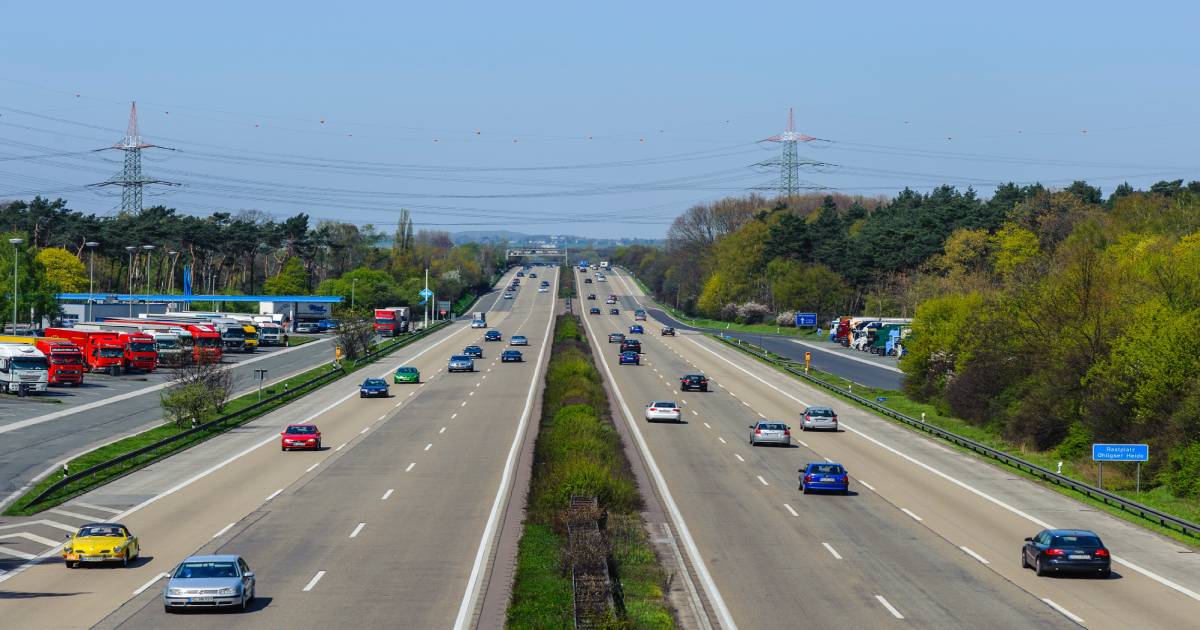
In the most recent annual summary, Lexington Police say there were 25 fatal collisions resulting in 33 fatalities in Lexington 2019.cars in a highway

The locations with the most collisions resulting in injuries were:

  • Russell Cave Road between Park Place and W. New Circle Road – 9 collisions
  • E. New Circle Road and Tates Creek Road – 9 collisions

New Circle Road, also known as Kentucky Route 4, is the inner loop around Lexington. New Circle Road is seriously congested during morning and evening rush hours because it is the only freeway available for getting across the city. Many accidents on the inner loop of New Circle Road cause serious injuries because of the speeds at which vehicles are traveling.

You will see New Circle Road, Man o’ War Boulevard, Tates Creek Road, Nicholasville Road, and other primary routes in Lexington named repeatedly in car accident statistics.

According to police, the Lexington locations with the most collisions causing injury in 2019 were:

Man o’ War Boulevard between Alumni Drive and Easthills Drive, which had the most injury collisions overall and the most “between-street” collisions with 42 collisions.

Other locations with multiple between-street collisions causing injury were:

  • Russell Cave Road between Park Place and New Circle Road (9 collisions)
  • I-75 North between the Exit 113 on-ramp from U.S. 27 and the Exit 115 off-ramp to Newton Pike (6 collisions)
  • Nicholasville Road between Man o’ War Boulevard and Toronto Road (6 collisions)


 E-W Reynolds Road and Nicholasville Road had the most intersection collisions causing injuries with 33 collisions.

Other locations with multiple intersection collisions causing injury were:

  • E. New Circle Road and Tates Creek Road (9 collisions)
  • Belleau Wood Drive-Clearwater Way and Man o’ War Boulevard (7 collisions)
  • E-W. Fifth Street and North Limestone (6 collisions)
  • Keeneland Boulevard-Man o’ War Boulevard and Versailles Road (6 collisions)
  • Man o’ War Boulevard and Saron Drive-Tates Creek Centre Drive (6 collisions)
  • Moore Drive and Nicholasville Road (6 collisions)
  • Radcliffe Road and Russell Cave Road (6 collisions)


E. Vine Street and Rose Street had the most collisions with injuries involving a driver who ran a red light with 6 collisions. Citywide, there were 325 injury collisions involving a red light violation.

Other intersections with multiple injury collisions caused by someone running a red light were:

  • Moore Drive and Nicholasville Road (6 collisions)
  • Coleman Court and Newtown Pike (5 collisions)
  • Man o’ War Boulevard and Nicholasville Road (5 collisions)
  • Newtown Pike-Oliver Lewis Way and W Main Street (5 collisions)

Get Compensation for a Lexington, KY, Car Accident

In addition to causing medical trauma, a Lexington car accident can create financial stress for you and your family due to medical bills and loss of income.

But if someone else was at fault for the accident, you may have the right to seek compensation for:

  • Current and future medical bills related to your injuries
  • Permanent disabilities
  • The cost to repair your vehicle
  • Lost wages
  • Reduced earning potential
  • Pain and suffering.

Insurance companies will try to avoid paying what you truly deserve for a serious injury and may offer a low-ball settlement. But if you call our Kentucky Courage auto accident lawyers before you talk to the insurance companies, we can investigate to determine who owes you compensation and calculate every dime you are due. Then we’ll move aggressively to recover a proper payment for you.

Contact Morgan, Collins, Yeast & Salyer now to set up a free consultation about how we can handle your car accident claim. Let us tell you how Kentucky Courage can help make things right for you.

The post Dangerous Roads in Lexington, Kentucky appeared first on Morgan, Collins, Yeast & Salyer.


from Morgan, Collins, Yeast & Salyer https://www.kentuckycourage.com/blog/dangerous-roads-in-lexington-kentucky/
via https://www.kentuckycourage.com
Morgan, Collins, Yeast & Salyer Sponsors Lafayette High School Band

Morgan, Collins, Yeast & Salyer is proud to sponsor the Lafayette High School Band. The Lafayette High School Band program consists of the marching band, concert bands, jazz band, percussion ensemble, and color guard. The marching band and color guard begin their demanding schedule with band camp in July and generally rehearse and perform from August through early November. Lafayette Marching Band competes in the Kentucky Music Educators Association (KMEA) 5A classification. Concert Bands and Jazz Band perform from December through May and members regularly participate in KMEA festivals, solos and ensembles. The marching band, concert bands and jazz band all appear at school and community functions throughout the year. The bands perform under the direction of Charles M. Smith and Mr. Robert “Dee” Bishop. Learn more here.

The post Morgan, Collins, Yeast & Salyer Sponsors Lafayette High School Band appeared first on Morgan, Collins, Yeast & Salyer.


from Morgan, Collins, Yeast & Salyer https://www.kentuckycourage.com/blog/morgan-collins-yeast-salyer-sponsors-lafayette-high-school-band/
via https://www.kentuckycourage.com

Wednesday, April 28, 2021

What Dangers Do I Face When Working in a Warehouse?

Warehouse workers and material movers employed in warehouses that are part of wholesale and retail operations shelve and retrieve freight, stock or other materials. Warehouse employees may work on elevated loading docks and around conveyors, forklifts, and electrical systems common to industrial settings. Warehouse workers lift and carry heavy objects. Their work is repetitive and physically demanding. 

Moving heavy objects around warehouses or onto trucks may lead to sprains, strains, overexertion or cumulative injuries. Many types of accidents can happen in a large warehouse operation, from a slip and fall accident to a collision with a forklift to being struck by falling boxes. Accidents in warehouses can lead to serious or fatal injuries.

If you or a loved one has been injured while working in a warehouse in Kentucky, an experienced workers’ compensation lawyer from Morgan, Collins, Yeast & Salyer can help you seek the full benefits available to you by law. Our law firm has recovered more than $200 million in workers’ compensation benefits for hardworking Kentuckians. We stand ready to fight for you. Contact us today to schedule your free legal consultation.

Potential Hazards Associated With Warehouse Work

More than 1.4 million people work in warehouses in the United States. Nearly 30,500 Kentuckians are employed in warehousing and storage. The fatal injury rate for the warehousing industry is higher than the national average for all industries, the Occupational Safety and Health Administration (OSHA) says.

A warehouse employee who is injured on the job and cannot work for seven days or more should qualify for workers’ compensation benefits. Workers’ comp is no-fault insurance that pays all medical expenses and a portion of lost wages, as well as additional benefits for catastrophic injury and death.

A warehouse employee who is injured on the job should not have to fight for workers’ comp benefits. But workers’ comp insurance administrators sometimes deny or dispute valid workers’ comp claims. Some employers try to take advantage of injured workers who are unfamiliar with the Kentucky workers’ compensation system.

We urge you to contact a workers’ compensation attorney from Morgan, Collins, Yeast & Salyer to discuss the benefits available after suffering a warehouse accident. Some of the most common causes of compensable warehouse injuries include:

  • Physical Strain. Warehouse workers are often required to perform repetitive motions, including reaching, bending, pushing, pulling, lifting and carrying heavy objects. Many warehouse workers develop musculoskeletal injuries, particularly back injuries, from performing these types of labor. A strain or sprain can occur by lifting a heavy object or because of cumulative wear and tear over time.
  • Moving Machinery. Warehouse workers are often hit by forklifts, metal-body vehicles with protruding forks that move materials in warehouses and on loading docks. Warehouse workers dealing with conveyors can be injured if they become caught by pinch points, or develop musculoskeletal disorders associated with awkward postures or repetitive motions required to feed or retrieve from conveyors.
  • Falling Objects. Materials on warehouse shelves, loading docks or conveyors, or lifted by forklifts may fall and strike workers, causing blunt force or crushing injuries. Falling object injuries also occur in accidents involving the collapse of shelving, crates, or supports.
  • Exposure to Harmful Substances. There are numerous potential harmful exposures in a warehouse operation. Violations of lockout/tagout standards, which are meant to prevent exposure to electrical shock or electrocution, are among the most frequent OSHA violations found in warehouses. When toxic materials are among the items being stored, chemical burns are possible if hazardous materials spills occur.
  • Slips, Trips and Falls. Workers may slip or trip and fall on warehouse floors that are wet, cluttered, uneven or poorly lighted. Accumulated dust, sand, or sawdust on concrete floors is a slipping hazard, as well. Falls can lead to head and traumatic brain injury, back injury, broken bones and other traumatic injuries. In addition to general cleanliness and tidiness, OSHA regulations require specific guarding for floor and wall openings. a warehouse worker fell on the floor after he was hit by a heavy box - warehouse hazards
  • Cumulative Trauma. Cumulative trauma disorder (CTD) is the excessive wear and tear on muscles, tendons, and nerve tissues caused by repetitive motion over an extended period of time. Bending, reaching, stretching or lifting for several hours every day of a workweek creates micro-traumas within the worker’s body that never have the opportunity to heal. Eventually, the cumulative trauma causes chronic pain and loss of mobility.

Our Attorneys Help Injured Warehouse Employees

If you are a warehouse employee and you have been injured in an accident at work or from the cumulative effects of your job duties, you should speak to an attorney about workers’ compensation benefits you may be entitled to claim under Kentucky law.

Many Kentucky workers eligible for workers’ comp payments go without the full benefits they deserve because they do not understand the system and they have no one to stand up for them. This is especially true among laborers who are incorrectly told their cumulative work injuries are due to age and are not occupational injuries. 

The experienced workers’ compensation attorneys at Morgan, Collins, Yeast & Salyer will stand up for you. We understand the types of accidents that warehouse workers commonly suffer and the wear-and-tear injuries that end workers’ careers and make them eligible for workers’ compensation.

Our attorneys can help you pursue the workers’ compensation benefits you have a right to seek for your warehouse injury. We can file your claim, document the full extent of your injuries, and negotiate a fair settlement on your behalf with the workers’ compensation insurance company. If the insurers will not settle, your Morgan, Collins, Yeast & Salyer workers’ compensation attorney will represent you in all necessary hearings before state officials and Administrative Law Judges.

It takes Kentucky Courage to fight for fair workers’ compensation benefits when your employer says you don’t deserve them. You have the legal right to claim what you are due, and the lawyers of Morgan, Collins, Yeast & Salyer have the courage to fight for you. Contact us now for a free claim review.


The post What Dangers Do I Face When Working in a Warehouse? appeared first on Morgan, Collins, Yeast & Salyer.


from Morgan, Collins, Yeast & Salyer https://www.kentuckycourage.com/blog/what-dangers-do-i-face-when-working-in-a-warehouse/
via https://www.kentuckycourage.com

Wednesday, April 21, 2021

Do Workers’ Comp Benefits Apply When Employees Work from Home?

During the COVID-19 pandemic, many people have worked from home for periods of time.

Some workers have happily settled into WFH routines. Some have questions about whether their employer’s workers’ compensation insurance covers them if they are injured while working at home. The short answer is Yes. Workers’ compensation covers employees who are injured while performing job duties. The location where you are performing job duties when injured is not a factor.

Workers have routinely obtained workers’ comp benefits after suffering injuries on business trips, or while making deliveries, or while visiting clients. If you have been injured in an accident while performing job duties at home, you deserve workers’ compensation benefits just as if you had been injured in your office or on a construction site. But don’t be surprised if the workers’ comp insurance administrator raises questions.

If you have been injured while working from home and are getting any pushback about obtaining workers’ compensation benefits, you should speak to an experienced workers’ comp attorney as soon as possible. In Kentucky, a workers’ compensation lawyer from Morgan, Collins, Yeast & Salyer can provide the Kentucky Courage you need to fight for your rights and the full benefits provided by law. Contact us today to set up your free consultation.

Typical KY Workers’ Compensation Coverage Eligibility

In the state of Kentucky, all employers must carry workers’ compensation insurance or be self-insured, regardless of the number of people they employ or whether the workers are full-time or part-time. Certain agricultural employers are exempt from Kentucky’s workers’ compensation program. Independent contractors, domestic workers, and most volunteers also are not eligible to receive workers’ compensation benefits.

Workers’ compensation benefits are available to cover employees who suffer physical injuries or occupational diseases arising out of their employment. This does not include injuries suffered while commuting to and from work, such as in a car accident. But it does include injuries suffered during travel that are a part of job duties, such as making deliveries or driving to meet with a customer.

Illness is covered if the infirmity is caused by conditions of the workplace, including illnesses that develop over time. Illnesses that are a part of the natural aging process are not covered.

WFH Likely to Be an Ongoing Trend in Some Employment Sectors

A December 2020 Pew Research Center survey found that prior to the COVID-19 pandemic, 20% of all employed people whose jobs could be done from home actually worked from home all or most of the time. That number had increased to 71% by the end of 2020, with 54% saying they would prefer to continue working from home after the pandemic ends.

But this only works for some people. A majority of workers told Pew their job responsibilities cannot be done from home. Most upper-income workers can do their work on a computer from home, but most lower- and middle-income workers cannot. While 62% of workers with a bachelor’s degree or more education say their work can be done from home, only 23% of those without a four-year college degree make the claim.

The U.S. Bureau of Labor Statistics said in February 2021 that one of its major assumptions looking ahead is that telecommuting will be offered on a more permanent basis. “According to an analysis, working from home is generally feasible in management, professional and administrative support jobs, including those in the information, financial activities, professional and business services, and public administration industries.”

How Does Workers’ Compensation Apply to WFH Employees?

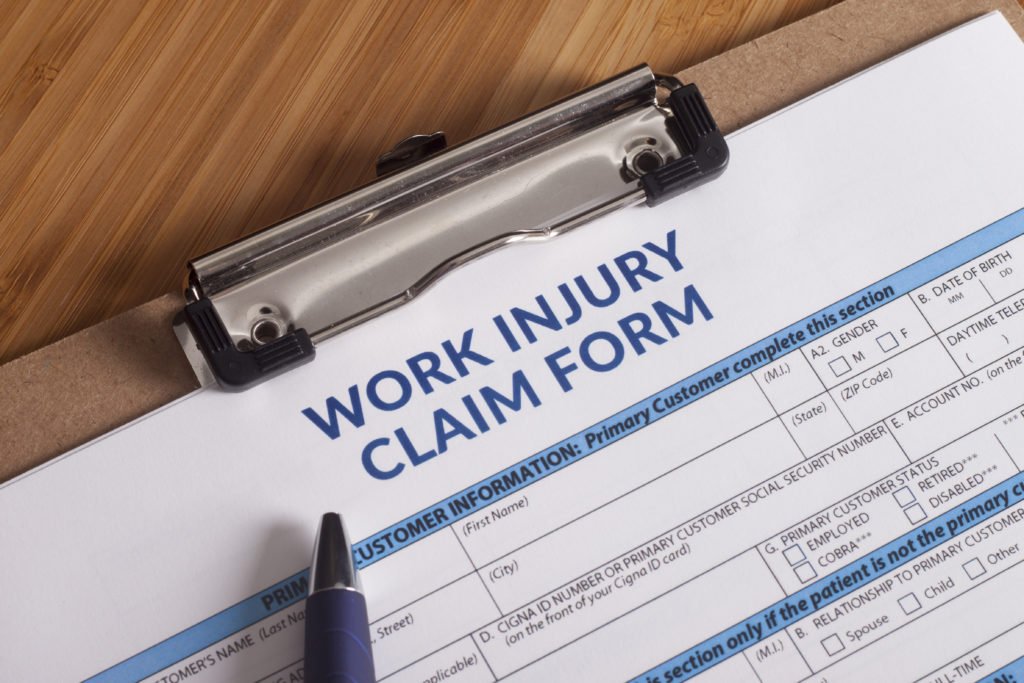
work injury claim formIf you are injured and seek workers’ compensation benefits, the primary question is going to be, “Were you on the job when you were hurt?”

In a challenge to your claim, the questions would focus on whether your injury did in fact arise from your job duties or whether you were acting in your employer’s interests when the accident happened.

For people working from home, the lines between work life and personal life can get blurry. An employer might challenge a work-at-home injury. What happens if an employee trips over one of their child’s toys while on the clock and is injured in the fall?

“Courts have found that an employer’s lack of control over the conditions of an employee’s home-based work premises is irrelevant,” the pro-employer Society for Human Resource Management (SHRM) says. “When an employee’s home is also an employee’s work premises, it is often interpreted that the hazards an employee encounters when performing work at home are also hazards of his or her employment.”

In other words, courts see the employee’s home as an extension of the workplace if the employer has agreed to a work-at-home arrangement.

In another look at workers’ compensation obligations for employees working from home, SHRM says employers should set a telecommuting policy that outlines the employer’s expectations for employees who work from home, including:

  • Expected work product
  • Expected job location
  • Job hours and how the employee clocks in and out
  • Allowed break times

A work-from-home agreement would protect employees, as well, and is something to consider suggesting if you are working at home without applicable company policies.

SHRM says the employer’s first defense against a workers’ comp claim will center on whether the teleworker gave appropriate notice to a supervisor of the injury. We advise that you or someone acting on your behalf should report a workplace injury within a week of the accident, though legally you have up to 30 days.

SHRM also suggests that employers check with their workers’ compensation and general liability insurance carriers to ensure that all appropriate coverages apply to employees who work from home.

Contact a KY Workers’ Compensation Attorney

You are covered by workers’ compensation insurance and Kentucky workers’ comp laws if you are an employee working from home in Kentucky. If you have been injured while on the job and are out of work because of the injury, you should inform yourself about the benefits available to you by speaking with a knowledgeable workers’ comp lawyer.

Report your injury to your employer and contact the Kentucky workers’ compensation lawyers of Morgan, Collins, Yeast & Salyer. We’ll show them what Kentucky Courage is as we fight for you. Contact us online or at (877) 809-5352 for a free initial consultation and dedicated representation.

The post Do Workers’ Comp Benefits Apply When Employees Work from Home? appeared first on Morgan, Collins, Yeast & Salyer.


from Morgan, Collins, Yeast & Salyer https://www.kentuckycourage.com/blog/wfh-workers-comp-benefits/
via https://www.kentuckycourage.com