Tuesday, April 21, 2020

How to Keep Up with Your Medical Care During the COVID-19 Shutdown

Individuals with ongoing medical needs may be concerned about obtaining medical care during the COVID-19 pandemic. Any patient seeking medical care should know that medical offices are essential businesses and are exempt from Kentucky Gov. Andy Beshear’s order closing all non-life-sustaining businesses.

Medical professionals are expected to practice safety protocols, such as social distancing. You can get the medical care you require in Kentucky without unnecessary risk of exposure to the COVID-19 coronavirus.

At Morgan, Collins, Yeast & Salyer, our attorneys represent clients who have suffered a personal injury or workplace injuries, and for whom receiving ongoing medical care is often a necessity. The Kentucky personal injury and workers’ compensation lawyers of Morgan, Collins, Yeast & Salyer stand beside you during this trying time with the Kentucky Courage we bring to the table as your attorneys. If you need our help, don’t hesitate to contact us at (877) 809-5352 or online.

What to Expect from Doctors During the COVID-19 Shutdown

The Centers for Disease Control and Prevention (CDC) has issued guidelines for all U.S. healthcare facilities to respond to community spread of the COVID-19 coronavirus. “Community spread” refers to the presence of the virus in a specific area, including among some people who are not sure how they became infected.

The CDC reaffirms that maintaining a functioning healthcare system is of paramount importance. “It is critical for healthcare facilities to continue to provide care for all patients, irrespective of COVID-19 infection status, at the appropriate level, whether that involves home-based care, outpatient treatment, urgent care, emergency room care, or hospitalization.”

The CDC is advising medical offices to explore alternatives to face-to-face triage and visits. This includes:

  • Instructing patients to use available patient portals, online self-assessment tools, or to call and speak to an office/clinic staff member if they have coronavirus symptoms, such as fever, cough, or shortness of breath.
  • Identifying staff to conduct telephone and telehealth interactions with patients. Medical offices are to develop protocols so staff can assess patients quickly.
  • Determining measures to identify which patients can be treated by telephone and which patients will need to be seen at the doctor’s office or at emergency care.
  • Instructing patients that if they have respiratory symptoms they should call before they leave home, so staff can be prepared to care for them when they arrive.

The Kentucky Medical Association is urging physicians to follow guidance from the CDC and the Kentucky Cabinet for Health and Family Services. A major initiative of the KY Cabinet is to promote the adoption of telehealth services across the Commonwealth.

‘Telehealth’ Technology Increases Remote Medical Care Options

Telehealth” is the use of electronic information and telecommunications to support long-distance clinical health care, patient and professional health-related education, and public health and health administration. Technologies include videoconferencing, store-and-forward imaging, streaming media, and wireless communications.

In normal times, telehealth can connect patients who live in rural areas to services offered by distant providers. This capability enables patients to receive care in their communities and avoid long travel times. Today, telehealth allows all of us to stay at home and receive care we need without exposure to COVID-19.

Many healthcare organizations are already set up to provide telehealth. All a patient needs to use telehealth services is a stable internet connection and a computer, tablet or smartphone. Hospitals, clinics, doctors’ offices and other healthcare providers are all bound by the same requirements as in face-to-face visits to keep your health information safe.

Medicare, Medicaid, and the Kentucky Department of Insurance have authorized the increased use of telehealth services under COVID-19 prevention protocols. Medicare has specific services that may be offered via telehealth. The Kentucky telehealth law requires Medicaid and managed care organizations (MCOs) to cover medical services provided via telehealth to the same extent they cover medical services provided in-person.

The KY Department of Insurance prohibits insurers from requiring that a patient have a prior relationship with the provider in order to have services delivered through telehealth, if the provider determines that telehealth would be medically appropriate.

Under emergency rules, the following services are permissible as telehealth services or as a telecommunication-mediated health service:

  • Applied behavioral analysis
  • Behavior supports and counseling services
  • Case management
  • Certified alcohol and drug counselor (CADC) counseling
  • Comprehensive community support services
  • Day treatment
  • Early and Periodic Screening, Diagnostic, and Treatment (EPSDT) benefit services
  • Group outpatient therapy
  • In-home services, such as personal care or homemaking
  • Intensive outpatient program services
  • Mobile crisis services
  • Partial hospitalization
  • Peer support services
  • Physical, occupational and speech therapy
  • Prosthetic and orthotic services
  • Service planning
  • Supported employment
  • Therapeutic rehabilitation program.

The U.S Department of Veterans Affairs is also expanding its telehealth services for veterans during the COVID-19 pandemic.

Support Yourself During Social Distancing, Quarantine and Isolation

This is a stressful time for all of us. Everyone reacts differently to stressful situations, and no one truly knows what to expect from an infectious disease outbreak that requires social distancing, quarantine or isolation.

Here are some tips for coping from the CDC and from the Substance Abuse and Mental Health Services Administration (SAMHSA):

  • Stay up to date on what is happening. Look to credible sources for information on the infectious disease outbreak, such as the CDC or the official Team Kentucky source for information concerning COVID-19.
  • Take care of your physical health. Try to eat healthy and well-balanced meals, exercise regularly and get plenty of sleep. Now and then, stop to take deep breaths and stretch. Avoid alcohol and drugs.
  • Stay connected to others. Use the telephone, email, text messaging, and social media to connect with friends, family, and others. Talk “face to face” with friends and loved ones using Skype or FaceTime.
  • Take breaks from watching, reading or listening to news stories, and especially from social media. Hearing about the pandemic repeatedly can be upsetting.
  • Arrange for your needs. Inform health care providers of any medications you need regularly and work with them to ensure that you continue to receive those medications. Ask your health care providers about telehealth capabilities, or social distancing and other safety protocols if you are to make office visits. Provide your employer with a clear explanation of why you are away from work, if necessary.
  • Reduce financial stress. Contact your utility providers, cable and Internet provider, landlord or mortgage banker, and other creditors as soon as you realize you may have a problem making payments to explain your situation and request alternative arrangements.
  • Reach out. Call SAMHSA’s free 24-hour Disaster Distress Helpline at 1-800-985-5990 if you feel lonely or need support. If you need to connect with someone because of an ongoing alcohol or drug problem, and are not already in a 12-step program, consider contacting a local Alcoholics Anonymous or Narcotics Anonymous

The COVID-19 hotline at (800) 722-5725 is a service operated by the healthcare professionals at the KY Poison Control Center who can provide advice and answer questions. Because the phone line is likely to be extremely busy, check online for the answer to general questions before calling.

The post How to Keep Up with Your Medical Care During the COVID-19 Shutdown appeared first on Morgan, Collins, Yeast & Salyer.


from Morgan, Collins, Yeast & Salyer https://www.kentuckycourage.com/blog/how-to-keep-up-with-your-medical-care-during-the-covid-19-shutdown/
via https://www.kentuckycourage.com

Tuesday, April 7, 2020

Coal Miners and Coronavirus

As many Americans stay home to wait out the coronavirus pandemic, Kentucky coal miners still go down to the mines, deemed an essential business, where the virus is one more potentially deadly threat coal miners face each working day.

Coal miners may be especially vulnerable to the coronavirus because of the working conditions and the significant incidence of lung damage from years of exposure to coal dust, silica and diesel exhaust, said the Washington Post, quoting medical researchers.

First identified in a Kentucky resident March 6, the coronavirus is spreading as incidences of black lung disease, lung cancer and COPD continue to rise among U.S. coal miners. Working and retired mine workers who have black lung or other pulmonary disease are seen as being at greater risk of becoming very ill if exposed to the coronavirus. The coronavirus is spread through respiratory droplets produced when an infected person coughs, sneezes or talks, according to the Centers for Disease Control and Prevention (CDC).

UMWA Seeks Protection Against COVID-19 for Coal Miners

The United Mine Workers of America (UMWA) has asked federal regulators to set uniform, enforceable guidelines to help protect coal miners from contracting COVID-19. In a letter dated March 24, UMWA President Cecil Roberts asked the Mine Safety and Health Administration (MSHA) to require mine operators to:

  • Ensure that miners have access to N-95 respirators
  • Set procedures for disinfecting equipment between shifts
  • Provide extra personal protective equipment (PPE)
  • Create disinfectant strategies for bathhouses and other communal gathering places.

“Our miners work in close proximity to one another from the time they arrive at the mine site,” Roberts said in the letter. “They get dressed, travel down the elevator together, ride in the same man trip, work in confined spaces, breathe the same air, operate the same equipment, and use the same shower facilities.

“Many miners are also old and suffer from various underlying health conditions, such as pneumoconiosis, which the UMWA believes will greatly exacerbate the severity of the symptoms related to COVID-19; heart disease – a condition that in itself suppresses the immune response, leaving the afflicted more susceptible to harmful pathogens; and compromised immune systems.”

Roberts added that these high-risk miners often live in rural communities and have less access to medical care than is available in urban areas.

UMWA spokesperson Phil Smith told the Ohio Valley Resource that while some mines are voluntarily taking precautions to protect workers, the efforts are not uniform across the industry.

Blackhawk Mining, a Kentucky coal company operating nine mining complexes across three states, voluntarily shut down operations from March 23 through April 5 because of the pandemic. Its workers were not paid but kept their benefits, including health care, while on furlough.

As of this writing, the MSHA’s COVID-19 recommendations echo the CDC’s, which include avoiding close contact.

“MSHA is abiding by the President’s Coronavirus Guidelines for America, which are based on the CDC Interim Guidance for Risk Assessment and Public Health Management of Persons with Potential Coronavirus Disease,” the website says.

Of about 5,200 people in Kentucky who work in the coal industry, about 3,200 are underground miners and another 1,000 work in surface mines.

Kentucky Coal Miners at Risk Just for Breathing

Pulmonary disease is common among coal miners because of the air they breathe on long work shifts in and around the mines. Exposure to coal dust causes various respiratory diseases, including coal workers’ pneumoconiosis (CWP), aka “black lung disease” or “miner’s lung,” and chronic obstructive pulmonary disease (COPD).

Coal miners are also exposed to crystalline silica dust, which causes silicosis (a type of pulmonary fibrosis), COPD and other diseases.

Black lung disease causes inflammation of lung tissue, coughing and fibrosis, which is thickening or scarring of lung tissue. There is no cure, but treatment can help improve quality of life through management of symptoms. Black lung disease can lead to such complications as chronic bronchitis, which is a long-term inflammation of the breathing tubes, or lung cancer, as well as COPD.

COPD is a chronic inflammatory lung disease that causes obstructed airflow from the lungs. Symptoms include breathing difficulty, cough, mucus production and wheezing.

Each of these lung diseases can lead to impairment, disability and premature death.

While it is generally thought that it takes many years of coal mine work to develop severe respiratory problems, two studies presented in 2019 said black lung, COPD and other nonmalignant respiratory diseases appear to account for a greater proportion of death in the younger generation of miners.

Recent reports have pointed to an unexplained increase in the occurrence of progressive massive fibrosis (PMF) in recent years, most likely attributable to excess exposure to crystalline silica, according to the studies. Crystalline silica is a basic component of soil, sand, granite, and most other types of rock.

An increase in the incidence of black lung disease in recent years has been potentially attributed to changes in mining technology. The new technology allows extraction of higher volumes of coal and surrounding rock in a given time period and creates finer dust particles than can be inhaled deeply into the lungs.

How Can A Coal Mine Workers’ Compensation Attorney Help Me?

If you have become ill or been injured while working in the Kentucky coal industry, you should be eligible for workers’ compensation benefits, including reimbursement of medical costs, partial replacement of lost wages and, if needed, disability stipends.

If you are having difficulty obtaining workers’ compensation benefits, the Kentucky workers’ compensation lawyers of Morgan Collins Yeast & Salyer will fight for the full workers’ comp benefits you deserve. It takes Kentucky Courage to fight for comprehensive workers’ benefits while also battling a debilitating illness. Kentucky coal miners show courage every day. Our attorneys are ready to bring Kentucky courage and help you stand up for the full benefits available by law. Contact the experienced workers’ comp lawyers at Morgan, Collins, Yeast & Salyer today for a review of your case that is free, has no strings attached, and is available from the safety of your own home.

The post Coal Miners and Coronavirus appeared first on Morgan, Collins, Yeast & Salyer.


from Morgan, Collins, Yeast & Salyer https://www.kentuckycourage.com/blog/coal-miners-and-coronavirus/
via https://www.kentuckycourage.com

Monday, March 16, 2020

Concerned About Coronavirus? You Don’t Need to Leave the House to Meet with Our Lawyers.

We all have a duty to keep ourselves, our families, our neighbors, and our communities safe right now. This means temporarily reshaping the way we live our lives to combat the novel coronavirus (COVID-19). At Morgan, Collins, Yeast & Salyer, we are taking this duty seriously and are practicing the “social distancing” guidelines recommended by health officials. To ensure you still have access to us, our lawyers are available to meet with you remotely so we can answer your legal questions and discuss your case.  

Across the nation, people are limiting in-person contact as much as possible to help slow the spread of the virus and allow our healthcare system to operate within its capacity. The U.S. Centers for Disease Control and Prevention continues to provide important guidance about what we all can do to protect ourselves and others from exposure. (Visit the CDC website for the most up-to-date information and recommendations.)

During this challenging time, our attorneys remain available to talk about your legal issues over the phone or via free video conferencing services such as:  

  • GoToMeeting
  • Facetime
  • Skype
  • Zoom

If you are ready to speak with a lawyer now, please contact us to schedule your free consultation. Our team can meet with you remotely and get started on your case immediately without having to talk in person.

COVID 19 Prevention: Social Distancing

Health officials are recommending “social distancing” measures to cut down on close contact. This will help minimize the spread of the Coronavirus (COVID-19). Please make sure you review the Centers for Disease Control and Prevention (CDC) for more information about other steps you can take to protect yourself and others from exposure to this virus. 

General Info About (COVID-19)

More and more information about the virus is coming out daily. Please stay up to date on information and symptoms by checking the CDC’s website.

This virus spreads easily and sustainably! You can get COVID-19 “by touching a surface or object that has the virus on it and then touching your mouth, nose, or eyes.” It is thought that you are most contagious when you are displaying symptoms, however, you can be contagious before you even show symptoms. 

Symptoms of Coronavirus

Here are some of the major symptoms of the virus:

  • Respiratory Tract Infection – shortness of breath 
  • Fever/chills 
  • Cough
  • Flu-like symptoms  
  • Fatigue
  • Pressure in the Chest
  • Headaches
  • Muscle or Body Aches
  • Sore Throat 

Please note that carriers of the virus may not be displaying symptoms and that you are still at risk and may be carrying the virus and not know unless you are tested.

Contact Morgan, Collins, Yeast & Salyer


If you were hurt in an accident and are seeking legal help, let the attorneys at Morgan, Collins, Yeast & Salyer help you – in the comfort of your own home! If you would like to discuss your legal issues with any one of our attorneys, we can simply meet with you by phone.

Contact us now at (606) 598-2122 to schedule your free consultation and learn more about how we can meet with you remotely to review your claim.

The post Concerned About Coronavirus? You Don’t Need to Leave the House to Meet with Our Lawyers. appeared first on Morgan, Collins, Yeast & Salyer.


from Morgan, Collins, Yeast & Salyer https://www.kentuckycourage.com/blog/covid-19-coronavirus-update/
via https://www.kentuckycourage.com

Monday, March 9, 2020

Scott Borders Accepts Appointment to Kentucky Workers’ Compensation Board

Morgan, Collins, Yeast & Salyer would like to thank Scott Borders for his years of service to the law firm and congratulate him on his appointment as a judge on the Kentucky Workers’ Compensation Board.

Roy Collins, managing partner of Morgan, Collins, Yeast & Salyer, said, “We hate to see him go, but understand it’s a move that not only secures his well-earned retirement but also will allow him to apply his years of experience to ensure that injured workers and their employers receive fair administration of justice.”

Judges on the Workers’ Compensation Board are appointed by the Governor of Kentucky with the consent of the state Senate to serve four-year terms.

Scott has more than 30 years of experience handling workers’ compensation cases. He has worked as an insurance defense lawyer, as a plaintiff’s attorney in our Lexington office representing injured workers and as an administrative law judge. He previously served 14 years as a Kentucky workers’ compensation administrative law judge making decisions about people’s claims.

Scott has lectured on workers’ compensation at legal seminars and completed training from the National Workers’ Compensation Institute and the International Association of Industrial Accident Boards and Commissions.

He recognized the importance of helping regular people who are going through tough times because of work-related injuries. As a plaintiff’s attorney, he brought strength and experience and Kentucky Courage to each case he handled.

The kind of legal representation Scott provided clients is epitomized by the comments of former client Debbie Tucker, who offered a public testimonial about our law firm that is on our website

“I would wholeheartedly recommend the firm of Morgan, Collins, Yeast & Salyer to anyone needing help navigating the workers’ compensation system,” Tucker said. “I would most definitely recommend my amazing lawyer, Scott Borders.”

“As I sit here waiting for the phone to ring telling me it’s over, I can’t help but think how blessed I have been to have y’all in my corner.”

Scott earned a bachelor’s degree in business administration from the University of Kentucky College of Business in Lexington and received his law degree from the Northern Kentucky University Salmon Chase College of Law in Highland Heights.

Seek the Help of Qualified Workers’ Comp Attorney

If you have been seriously injured in a workplace accident, you should seek the guidance of a knowledgeable workers’ compensation lawyer. It takes courage not to give up when your claim has been turned down. You should never accept as the final word an employer’s denial of your claim or termination of your workers’ compensation benefits without having a qualified workers’ comp attorney review it.

As an injured employee, you have rights under Kentucky workers’ compensation law. Our experienced workers’ comp attorneys at Morgan, Collins, Yeast & Salyer provide the Kentucky Courage™ needed to appeal a disputed workers’ compensation claim. We will fight for your rights because we understand the outcome of your claim can affect the quality of your life for the years ahead. We’ll focus on seeking the maximum benefits available under the law.
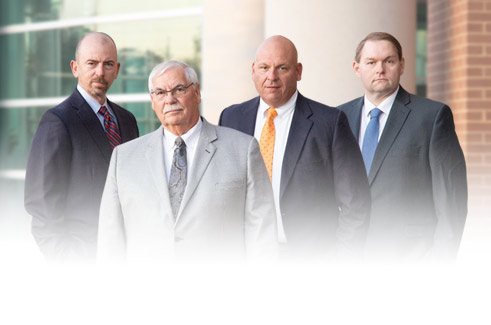

Our workers’ compensation attorneys represent injured workers in Lexington, Somerset, Manchester, London, Hazard, Paducah, Paintsville and throughout Kentucky. We are available to meet with you at one of our law offices, over the phone or at a location convenient to you.

workers' compensation team of lawyers

The post Scott Borders Accepts Appointment to Kentucky Workers’ Compensation Board appeared first on Morgan, Collins, Yeast & Salyer.


from Morgan, Collins, Yeast & Salyer https://www.kentuckycourage.com/blog/scott-borders-accepts-appointment/
via https://www.kentuckycourage.com

Thursday, March 5, 2020

New Cell Phone Driving Law Coming To Kentucky?

Could Kentucky adopt a tougher law restricting texting or using cell phones while behind the wheel of a car this year?

State Rep. James Tipton of Taylorsville has introduced a bill to do so, and he has six co-sponsors, according to the Louisville Courier Journal.

If the “Phone-Down Kentucky Act” becomes law, the use of a “personal communication device” or a “stand-alone electronic device” while driving or while temporarily stopped in traffic would be illegal. It would also be illegal to watch, record or broadcast video on such devices while driving.

The proposed law would apply to cell phones, tablets, laptop computers and personal digital assistants. Adding “stand-alone electronic device” to the ban covers any other mobile device that stores audio or video files retrievable on demand. It would be illegal to hold, use or in some cases even reach for these devices while driving.

Violations of the new law would bring a fine between $50 and $100 for a first or second offense. The fine would increase to between $100 and $199 for a third or subsequent offense or if the violation results in an accident.

The legislation focuses on texting, making cellphone calls and using personal electronic devices behind the wheel, which are among the most dangerous forms of distracted driving.

It makes exceptions for calling for medical help or law enforcement assistance during an emergency (i.e., phoning 911). It also allows hands-free or voice-operated technology along with the “minimal use of a finger to activate, deactivate, or initiate a function of the device.”

What’s The Current Kentucky Law about Distracted Driving?

You may be aware that Kentucky already has a law that makes texting while driving illegal. A bill signed into law on April 15, 2010, bans drivers of all ages from using a “personal communication device” to write, send or read “text-based communication” while a motor vehicle is in motion. The law prohibits text messages, instant messages and e-mail.

However, existing Kentucky law allows drivers who are 18 years old or older to make phone calls by entering or selecting a telephone number or a person’s name on a cell phone. Adult drivers are also allowed to use GPS devices while behind the wheel.

Under current law, drivers who are under age 18 are not allowed to hold cell phones or other personal communication devices while the vehicle is in motion. Using a navigation system is permitted, but it’s against the law for a driver to manually enter information while the vehicle is moving.

Is hands-free cell phone communication while driving is legal in Kentucky?

Over the years, police have said it’s difficult to enforce Kentucky’s existing texting-while-driving ban because holding a phone is not a violation and the law doesn’t expressly mention such activity as browsing social media or streaming music.

“The way the law is written, you could be driving down the road playing Angry Birds,” State Trooper Paul Blanton told the Courier Journal in 2015. “We can say, ‘Hey, it looked like you were texting.’ And the person can say, ‘Well, I wasn’t. I was looking up a number.’ ”

Previous attempts by lawmakers to toughen the law to make all casual use of a phone while driving in Kentucky illegal have repeatedly failed.

“A lot of your more conservative representatives and senators are against this type of legislation. They feel it’s too regulatory,” Bill Bell, head of the Kentucky Office of Highway Safety, said. “But my argument is, we’re talking about highway safety.”

The Danger of Distracted Driving to Highway Safety

Driver distraction is a leading contributor to crashes in Kentucky and across the U.S. Nearly 80 percent of crashes involve some form of distraction within three seconds before the incident, according to the Kentucky Office of Highway Safety.

Driver distraction occurs when drivers divert their attention from the task of driving to focus on some other activity. Discussions regarding distracted driving often focus on cell phone use and texting. But distracted driving also includes other activities, such as eating, talking to passengers or adjusting the radio or climate controls.

A distraction-affected crash is any crash in which a driver was identified as distracted at the time of the crash, the National Highway Traffic Safety Administration (NHTSA) says.

The NHTSA said that in 2017, there were 3,166 people killed in motor vehicle crashes involving distracted drivers nationwide. There were 599 pedestrians, bicyclists and other killed in distraction-related crashes.

Six percent of all drivers involved in fatal crashes were reported as distracted at the time of the crashes. Eight percent of drivers 15 to 19 years old involved in fatal crashes were reported as distracted. This age group has the largest proportion of drivers who were distracted at the time of the fatal crashes they were involved in, the NHTSA says.

Preliminary figures show there were 734 motor vehicle fatalities in Kentucky in 2019, compared to 724 in 2018, the Kentucky Transportation Cabinet’s Office of Highway Safety said. If 6 percent of drivers in 734 fatal motor vehicle accidents were distracted, that would be 44 distracted drivers.

Injured In An Accident By a Distracted Driver? Act Now

If you have been injured in a car accident that may have been caused by a distracted driver, you should seek legal help immediately. An experienced distracted driving accident attorney can investigate the accident to determine whether distracted driving was a contributing factor to the crash.

You may be entitled to seek compensation for your medical bills, damage to your vehicle, lost wages as you recover, pain and suffering and any long-lasting disabilities resulting from the collision. But insurance companies try to pay out as little as possible after an accident.

At Morgan, Collins, Yeast & Salyer, our car accident attorneys have the Kentucky Courage™ to stand up to insurance companies and demand justice. We have helped many Kentuckians pursue full and fair compensation for their losses in car accidents. We want to help you, too. Contact us today if you or a loved one is the victim of a distracted driver in Kentucky.

The post New Cell Phone Driving Law Coming To Kentucky? appeared first on Morgan, Collins, Yeast & Salyer.


from Morgan, Collins, Yeast & Salyer https://www.kentuckycourage.com/blog/new-ky-cell-phone-laws-for-drivers/
via https://www.kentuckycourage.com

Monday, March 2, 2020

Job Status with Kentucky Workers’ Comp

What Happens to My Kentucky Workers’ Comp Claim If I Quit My Job?

Many injured workers receiving Kentucky workers’ compensation benefits feel as if they are in a state of limbo. They are following their doctors’ orders and doing everything they can to recover so they’ll be declared fit for a job that they know they can no longer handle. Yet they are afraid that if they quit their employment, it will jeopardize their workers’ comp benefits.

If you are entitled to workers’ comp for a workplace injury or illness, your change in job status does not change that eligibility for medical care. You may quit your job if necessary. You should still have access to medical care through workers’ comp benefits if the doctor determines you need treatment. Having said that, it’s a good idea to consult with a knowledgeable workers’ compensation attorney about your options before handing in your notice. A conversation with an attorney can help you understand your rights and avoid unexpected issues.

In Kentucky, contact an experienced workers’ compensation lawyer from Morgan, Collins, Yeast & Salyer for a free consultation. We can explain your rights and work to protect them if you have a disputed claim. We’ll give you the Kentucky Courage you need.

Working While Receiving KY Workers’ Comp


working on the job with an open workers' comp case

In many workers’ comp cases, an injured worker recovers enough to return to light duty, but still needs additional medical treatment, such as rehab, for a full recovery. Under Kentucky workers’ comp rules, the employer can assign the worker to light duty at a lower rate of pay, which reduces the employee’s wage replacement benefits.

Leaving a job voluntarily can cause issues for a pending workers’ compensation claim. Any employer or insurance administrator may argue that the employer should not have legal responsibility for someone who no longer works for the company and has no intention of doing so again. After all, the point of workers’ compensation is to assist employees financially as they work to regain their health and resume their job duties.

You can expect wage replacement benefits to be terminated if you quit your job. If the employer is not obligated to pay you wages, then it stands to reason that the employer does not have to pay wage replacement benefits. In some cases, if your new job pays less than even the light-duty work offered by your old employer, an experienced workers’ comp attorney could help you recover some benefit to make up the difference.

Your ongoing medical needs should still be covered under your workers’ comp claim even if you quit your job. If your employer is disputing your right to workers’ compensation benefits, seek the sound guidance of our Kentucky workers’ compensation attorneys at Morgan, Collins, Yeast & Salyer.


Keeping Workers’ Comp Medical Benefits After Quitting a Job

Kentucky workers’ compensation law requires most employers to carry workers’ comp insurance and pay for reasonable and necessary medical care required to recover from an injury suffered on the job.

As long as the employee is seeing the assigned doctor and following doctor’s orders, all medical expenses should be fully covered. This includes all costs pertaining to the workplace accident, such as prescriptions, travel to medical appointments, diagnostic tests, and medical procedures.

If you resign from your job in the middle of your medical treatment paid by workers’ compensation, you should still receive medical benefits as long as the doctor determines you still need treatment. Medical benefits are “portable.” But temporary and permanent disability benefits to replace lost wages will be adversely affected.

There are strategies to consider prior to quitting your employment. In some situations, it may be beneficial to seek a lump-sum settlement of your workers’ compensation claim. This would be negotiated based on a percentage of your permanent partial disability (PPD). Your employer might even be agreeable to the idea of writing one check and being done with it.

It’s helpful to consult with an experienced Kentucky workers’ comp lawyer to discuss your options and whether seeking a lump sum settlement may be appropriate in your case. After determining the best approach, your attorney may be able to negotiate with the workers’ compensation benefits administrator on your behalf.

In the best-case scenario, an injured employee should reach “maximum medical improvement” from the workplace injury and be released from a doctor’s care before leaving a job. That way, all medical expenses should have been billed.

Secondly, you should not quit your job if you do not have another one lined up or have another source of income to sustain you.

Third, to reiterate, your disability/wage replacement benefits will cease as soon as you quit your job. For additional information, please see an overview of Kentucky workers’ compensation law.

Contact a Lexington, KY, Workers’ Comp Attorney Today

If you have been seriously injured on the job, your future may depend on the workers’ compensation benefits you receive. They may affect your quality of life for years to come. Never accept an employer’s denial or discontinuation of your worker’s compensation benefits as the final decision without having a qualified workers’ comp lawyer review your right to benefits.

If we believe you have a valid claim, our experienced workers’ comp attorneys will fight for your rights as if you’re a member of our family. We’ll focus on the maximum amount of benefits available under the law. You have rights under Kentucky workers’ compensation law, including the right to quit your job and still receive medical benefits.

Don’t take on your employer’s workers’ comp insurance company by yourself. Contact us now to schedule your free consultation at one of seven locations across Kentucky.

Contact a workers’ compensation lawyer at Morgan, Collins, Yeast & Salyer in Kentucky for help right away.

Free consultation with the team at Morgan, Collins, Yeast, & Salyer

The post Job Status with Kentucky Workers’ Comp appeared first on Morgan, Collins, Yeast & Salyer.


from Morgan, Collins, Yeast & Salyer https://www.kentuckycourage.com/blog/kentucky-workers-comp-job-status/
via https://www.kentuckycourage.com

Tuesday, February 25, 2020

Kentucky Medical Services in Workers’ Comp: How Does It Works?

Under Kentucky’s workers’ compensation laws, a worker who has been injured on the job or developed a work-related illness may receive paid medical care. All medical payments are the responsibility of the employer and are usually handled by a workers’ compensation insurance administrator. The injured worker is not required to make co-payments for medical treatment under a workers’ compensation claim.

Fees available to physicians, hospitals and pharmacists are set by the Commonwealth every two years. No excess charges or co-pays should ever be billed to the patient.

If your employer is disputing your right to paid medical care for an on-the-job injury or you are being billed for treatment related to your job-related injury or illness, you need to speak to an experienced KY workers’ compensation attorney right away. At Morgan, Collins, Yeast & Salyer in Kentucky, we fight for injured workers. Our mission is to help you receive the proper KY workers’ compensation benefits provided by law.

Workers’ Comp Medical Benefits in Kentucky

Workers’ compensation is state-mandated no-fault insurance coverage provided to almost all full- and part-time employees in Kentucky. Most employers are required to provide workers’ compensation insurance coverage.

To take full advantage of the benefits available to you, you need to understand the breadth of what qualifies as a medical payment in the KY workers’ comp system.

Kentucky law (KRS 342.020) says that “the employer shall pay for the cure and relief from the effects of an injury or occupational disease as may reasonably be required at the time of the injury and thereafter … or as may be required for the cure and treatment of an occupational disease.”

Work-related medical expenses may be payable for life in cases of permanent disability or terminal illness and must be paid within 30 days of receipt by the employer without copayments or deductibles.

Medical expenses covered by workers’ compensation include:

  • Ambulance and emergency room fees
  • Fees charged by doctors and chiropractors
  • Prescription costs
  • Hospital bills
  • Surgical supplies and appliances
  • Costs of nursing care
  • Tests (such as x-rays and MRIs)
  • Durable medical equipment
  • Disposable medical supplies
  • Prosthetics and braces
  • Travel expenses to and from medical appointments
  • Vocational and occupational rehabilitation.

If your employer or their insurer challenges the validity of a medical expense, the employee may appeal to an Administrative Law Judge employed by the workers’ comp system to determine whether the expense is reasonable. There may be workers’ compensation case law that points to the validity of the workers’ claim. However, the ALJ cannot share this information, and it is certainly against the employer’s interests to do so.

This is when an experienced KY workers’ compensation attorney can be of great assistance to you. A Morgan, Collins, Yeast & Salyer workers’ compensation attorney will gather medical evidence, prepare your appeal and advocate for you to receive the full medical benefits available under Kentucky law.

Choosing Your Own Doctor in a KY Workers’ Comp Claim

Injured workers in Kentucky have a right to select the physician who treats them. The designated physician will provide primary treatment to the injured or ill worker and will be responsible for referring the employee to additional medical care providers as necessary.

If your employer participates in a managed health care network, you are required to select a doctor from the list of physicians within the managed care network. Except when emergency treatment is required, your designated physician must be in-network.

A workers’ compensation claimant may change their designated physician once without questions or permission. Additional changes require the employer’s or insurance carrier’s consent or for a workers’ compensation judge to approve the change if the employer/insurer objects.

However, an injured worker may seek a second opinion from an out-of-network doctor regarding major recommendations, such as surgery, at their employer’s expense.

When assigned to a workers’ compensation managed care plan, the injured or ill worker may also go outside of the network for:

  • Emergency medical care
  • Continued care from a physician who provided emergency care
  • Other treatment from a non-network physician begun prior to assignment to the plan
  • To receive treatment from a medical specialist through a referral by the designated physician in the managed care plan
  • Treatment not available through the plan.

These are rights provided to workers’ compensation recipients under Kentucky law. Most workers who find themselves suddenly injured on the job or diagnosed with an occupational illness have no idea how the KY workers’ compensation system works or the range of benefits it is supposed to provide.

A workers’ compensation lawyer from Morgan, Collins, Yeast & Salyer in Kentucky can review your disputed claim at no charge and advise you about your proper benefits. If you are being unjustly denied medical benefits for a workplace injury, our legal team can challenge those decisions for you based on our decades of experience as worker advocates handling appeals in the KY workers’ compensation system.

Contact a Lexington, KY, Workers Comp Attorney

An experienced workers’ compensation lawyer from Morgan, Collins, Yeast & Salyer can give you the Kentucky Courage needed to stand up to an employer or insurance administrator that is disputing your right to workers’ compensation medical benefits.

Most injured workers hire an attorney to file a workers’ compensation claim because of the complexity of the claims process. Don’t leave money on the table that you need. Our law firm is proud to have settled more than $200 million in workers’ comp benefits for hardworking Kentuckians like you.

Contact us today to set up your free legal consultation. We will not charge a legal fee unless we recover money for you. You don’t have to take on the insurance company by yourself. We stand ready to fight for you now.

The post Kentucky Medical Services in Workers’ Comp: How Does It Works? appeared first on Morgan, Collins, Yeast & Salyer.


from Morgan, Collins, Yeast & Salyer https://www.kentuckycourage.com/blog/medical-services-in-ky-for-workers-compensation/
via https://www.kentuckycourage.com